Special School

This old special school in a rural area of New Zealand has been used as a filming location in numerous films such as black christmas and narnia, with it now being completely abandoned and decaying. There are reports of misuse and abuse over the years at this institution when it was used as a school and with the remote location you can just imagine what bad things went on for the students.

The original plans for the overseas owner of this huge estate wanted to turn it into a international school, ferrying students from another city. This failed after the owners were made bankrupt in a massive financial crash of the owners company.

Enjoy the pics!

West Coast ghost town

Once a thriving railway township, Rewanui was abandoned in 1985 when the railway branch was closed. The town was taken care of and preserved by its caretaker until in 1988 where a huge landslide following a flood destroyed most of the buildings and bridges that remained, tragically killing the sole occupant of the town.

After quite a long walk and a lot of searching through bush we found many remnants of the past still exist throughout the valley including old coal carts and mines.


Nokor

Not your usual urbex video, but exploring ruins nonetheless. This is the strange fusion temple complex of Banteay Prey Nokor in Cambodia that we visited late last year. Situated in countryside near the town of Kompong Cham, the original 11th century Mahayana Buddhist shrine has been added onto over the centuries and incorporated into a bewildering and sprawling complex of wat’s and stupa’s. Apart from a security guard and a couple of monks we had the place to ourselves. More to come from Cambodia soon…

Undercity – House beneath the hotel

Until finding this place, I had no idea there was any kind of undercity in Wellington (drains notwithstanding).
It seems this hulking highrise luxury hotel has been built directly on top of an old house which is accessible from a dank ledge perched beneath the overhead colossus. Supporting columns sprout from the floors and pigeons seem to have taken up residence in this old home. Given Wellington’s tectonic nature, this was somewhat of an uneasy location to explore – but a very cool one nonetheless.

I’m not sure what the motivation was here in not demolishing the house, perhaps it was impossible to do so given some heritage protection – so the developers may have just worked “around” the problem…

Some old hotel paperwork hint at the house being previously accessible from the hotel above – but now any such route has been sealed over and the only access is via a a climb through a trash, rat and sewage filled dead space between buildings.

Cathedral of the damned

Planning a trip to Christchurch and meeting an overseas urbexer named WildBoyz from the United Kingdom was always an exciting prospect, teaming up with an experienced explorer from overseas with a load of locations in England already under his belt! Little did I know how many amazing locations we would end up finding.
Exploring Christchurch was both exciting and emotional, a city I used to come on holiday to, now vastly changed by the devastating earthquake of February 2011.

One of the most breathtaking explores we did on this trip involved coming across this grand cathedral, opened in 1905 it had association with the Vatican and was considered to be the finest renaissance-style building in New Zealand. After the February earthquakes two of the bell towers on the front of the cathedral collapsed and have since been removed and stored in a secret location by the priests, some of the stone blocks that came down have also been removed and numbered for later restoration. The future of the cathedral is unknown and the cosmetic and structural damage of the building is intense, there are plans to demolish the building while leaving some of the facade as a remembrance.

ZK-EPA


Abandoned in a patch of farmland in New Zealand lies this abandoned plane, the plane was originally a military plane which transported RNZAF squadrons until 1978. The plane was then sold on to an Airmotive company who had planned but found no further use with the plane, thus the fuselage was broken up and transported to the farmland where it still lays to this day, a sad end for such a fantastic and unique looking plane.


Gunkanjima

One of us was lucky enough to visit legendary “Gunkanjima” a few years ago. Hashima Island, known locally as Gunkanjima (Battleship Island)- is situated off the coast of Japan near Nagasaki. Mitsubishi purchased the island in 1890 and began the project of extracting coal from undersea mines. They built Japan’s first large concrete building (9 stories high) in 1916 to accommodate the burgeoning ranks of workers. Concrete was specifically used to protect against typhoon destruction. In 1959, the 6.3-hectare (16-acre) island’s population reached its peak of 5,259, with a population density of 835 people per hectare for the whole island. As petroleum replaced coal in the 1960s, coal mines began shutting down all over the country, and Hashima’s mines were no exception. Mitsubishi officially announced the closure of the mines in 1974, with the local workers/inhabitants having to vacate their island fortress immediately.

Gunkanjima is increasingly gaining international attention, not only for its modern regional heritage, but also for the undisturbed housing complex remnants representative of the period. In the 2012 James Bond film Skyfall, the island served as an inspiration for the lair of villain Raoul Silva, but filming did not take place on the island itself. One section was recreated at Pinewood Studios in England and the rest via CGI. In 2013, Google sent an employee to the island with a Street View backpack to capture its condition in panoramic 360-degree views and allow users to take a virtual walk across the island. Google also used its Business Photos technology to let users look inside the abandoned buildings, complete with old black-and-white TVs and discarded soda bottles.

The Lost Resort

Anyone visiting Rarotonga for more than a few days, will probably have heard of (or seen) the doomed and abandoned Sheraton resort on the south coast. For a tiny country (pop. 14,600) which earns half of its income from tourism, completing the project is seen as vital.

The history of the project dates back to 1987 when the Cook Islands Government signed a deal with an Italian bank, after being unable to attract the required foreign investment. The Government acted as guarantors for the NZ$52 million loan and agreed to an Italian company’s bid to build Rarotonga’s first luxury 5-star 200-suite hotel and golf course. Sheraton signed up to manage the property and work began on its construction in 1990.

However within a few years, the lion’s share of $52 million disappeared down a black hole carved out by the mafia and other crooks- the project was 80% complete when the insurance firm cut off funding to the builders. Since then, Rarotongans have seen a steady flow of foreign receivers, consultants, con men, lawyers, bankers and developers trying to figure out what to do with the site. The country’s finances were crippled as the government’s liability ballooned to $122 million, and taxpayers are still saddled with the interest bill. The issue of who owns the hotel has been stuck in the courts for years.

Many locals think the project was doomed from the beginning, after a curse was thrown on the site in 1911- after More Uriatua was shot dead by William John Wigmore, following a bitter argument over ownership of the land. At the project’s official launch, Metua More’s grandson, More Rua turned up dressed as a high priest in warlike regalia, intoning the resurrection of his grandmother’s curse. He ended by slamming his spear into a rock onto which a plaque had just been unveiled by the Prime Minister, marking the beginning of the Sheraton project. When the rock split to ground level, the locals saw it as a sign that the resort was still cursed and doomed. It still lies abandoned and derelict today, with no new grand plans of completing The Lost Resort.


2013 in review

The WordPress.com stats helper monkeys prepared a 2013 annual report for Urbex Central. Thanks for watching and stay tuned for 2014…

Here’s an excerpt:

The concert hall at the Sydney Opera House holds 2,700 people. This blog was viewed about 25,000 times in 2013. If it were a concert at Sydney Opera House, it would take about 9 sold-out performances for that many people to see it.

Click here to see the complete report.

Man on Wire

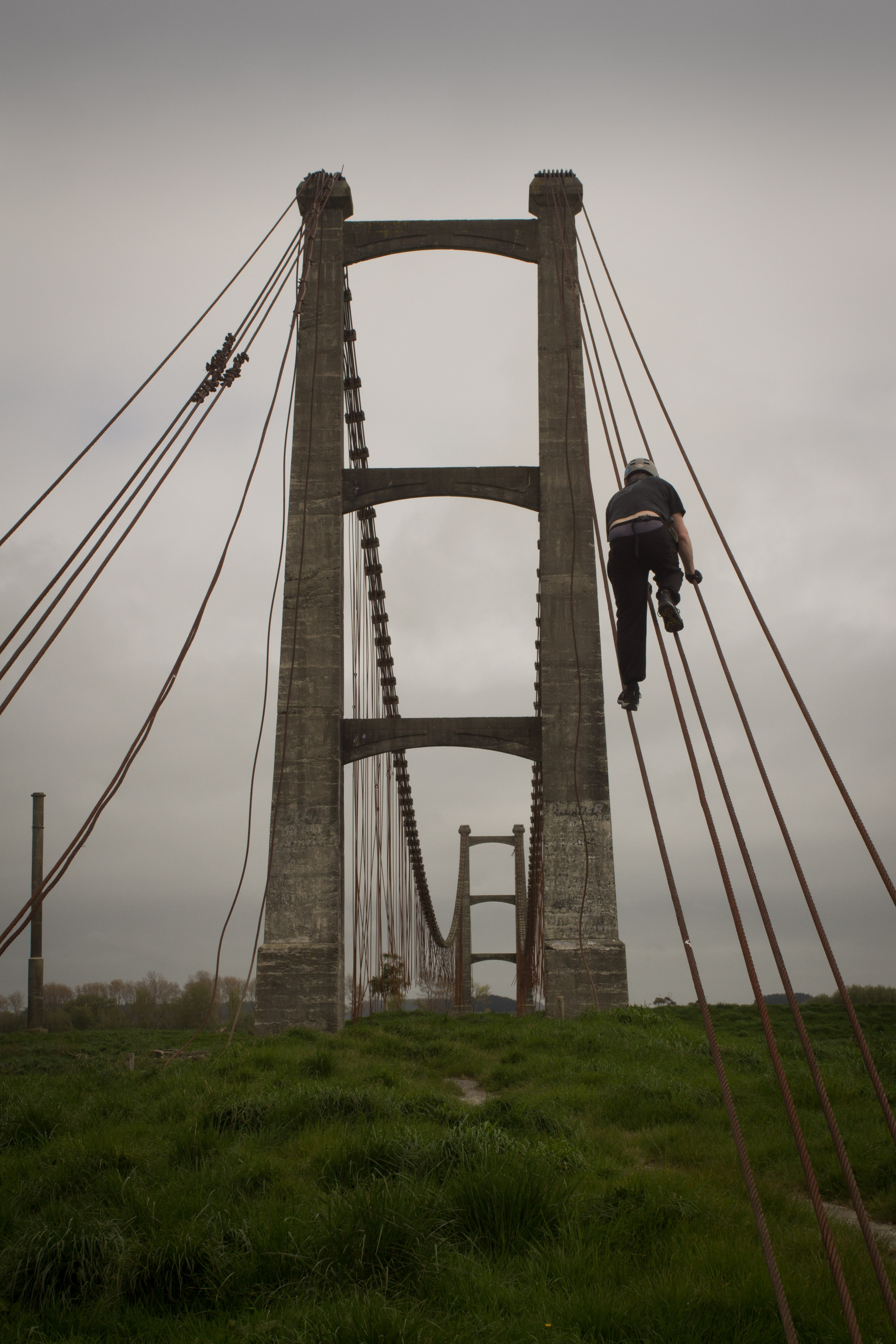
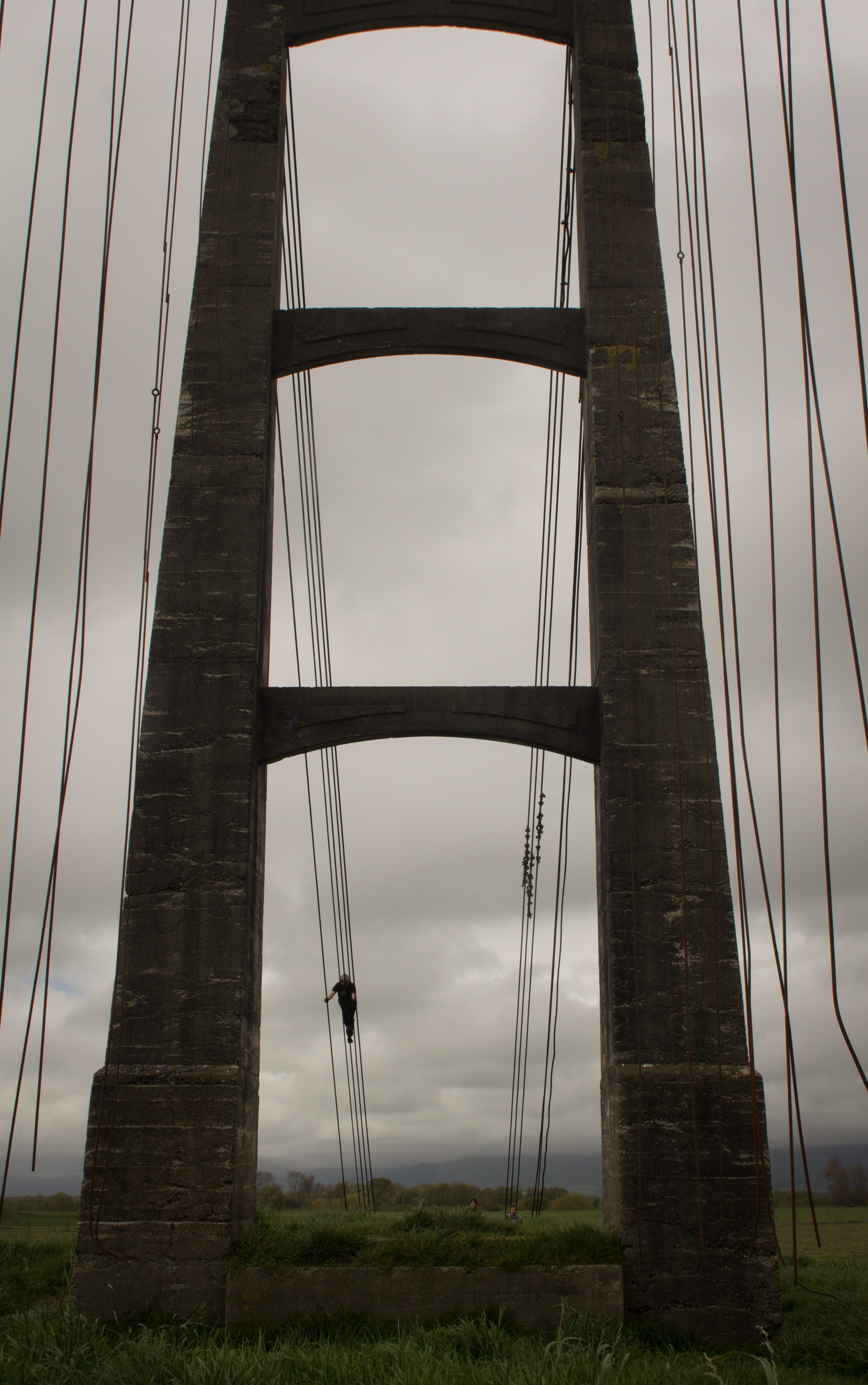
Gunner gets in some tight rope walking practise up the cables of an abandoned suspension bridge. This particular bridge was a crucial factor to the success of this region in the early to mid 19th century. Check out Gunner’s video of the event here

mow1. mow2 mow3 mow4 mow6


Beaufort

The Crusader fortress of Beaufort Castle- constructed in the 12th century- has been the focus for countless battles and the home of many occupiers over the centuries.

Beaufort (French for “beautiful fortress”) sits atop a 300 meter cliff which declines steeply to the Litani River. Its commanding location, with views over of much of southern Lebanon and northern Israel, is still of strategic value today.

In fact, Beaufort is one of the few cases where a medieval fortress has also proven to be of strategic military value, in the age of modern warfare.

In late 2005 the place was in ruins- but there was no mistake who held the high ground here.

Hezbollah’s AK47 emblazoned flag fluttered in the breeze- along with their allies and former rivals, AMAL.

Seven months later, the IDF once again invaded Lebanon- blitzing their way up to Beirut- laying South Lebanon to waste and cluster bombs in the July War

The Palestinian Liberation Organisation (PLO) held the castle from the beginning of the Lebanese Civil War in the mid 1970′s, until the Israeli invasion of Lebanon in 1982. The Israeli Defence Forces (IDF) finally evicted the PLO and occupied and fortified Beaufort, controlling south Lebanon for the next two decades.

Upon their withdrawl in 2000, the IDF set explosives and destroyed most of the structure. In 2007 an Israeli film- Beaufort– was released about an IDF unit stationed at the fortress.

Anba Hatre

Aswan, Egypt, Dec 2005: Anba Hatre is an earlier name for the 7th century Coptic Christian monastery of St Simeon- featured here in the previous post. During the exploration some video was shot on a very basic mini-DV tape camcorder, and due to this being the last tape. it was edited in camera to make the tape last longer. This is the result, with only a basic “damaged” effect and a soundtrack by the instrumental band Grails, appropriately titled “Erosion Blues”.

The Monastery

Aswan, Egypt, Dec 2005: After exploring some ancient tombs on the westbank of the Nile (featured here)- we decided to walk across the open desert to the ruined 7th century monastery of St. Simeon. It didn’t look far, but in the heat and harsh enviroment of the desert, it proved to be a bit more challenging. The Monastery of St Simeon dates back to the 7th century- it survived as a Christian stronghold of southern Egypt up until being sacked by Saladin in 1173 and abandoned. No real thorough archaeological attention has ever been paid to this ancient site. It was examined and published by Grossmann in 1985, and in 1998 by the inspectors of the antiquities- but still very little is known about this ancient monastery fortress.

SS1

SS2

SS5

SS4

SS5

SS6

SS8

SS9

Decrypt

Egypt, Dec 2005: Inspecting some ancient tombs on the westbank of the Nile- across from Aswan. They were completely off the tourist trail and not mentioned in any guidebooks. We eventually found a man who had keys to them and he let us in for a look- after a certain amount of “baksheesh” was paid. One tomb was for the overseer of Kom from approx 191bc- another dated way back, at least 4000 years…