A return and a farewell to this heritage-listed maternity hospital and it’s sprawling arts and crafts 1920’s styled grounds. Demolition machines arrived at the former Maternity Hospital on Nov 30th (2020)- the 1927 building was rubble by the afternoon. Heritage NZ confirmed they had not been aware of the coming demolition and were “saddened to hear” that this important part of New Zealand’s medical and social history had been demolished.
Category: Locations (geographic)
At The Bottom
In 2014 on a Urbexcentral excursion in the hills- Gunner (as per usual), saw this tower as a challenge rather than an obstacle and couldn’t be talked out of free climbing it. We waited in trepidation at the bottom, as he proceeded to knock the bastard off.
Overload
A return and a farewell to an enormous, decaying industrial site- on the eve of its imminent demolition, decontamination and redevelopment. The soundtrack (The Overload) by Talking Heads, is the finale from their 1980 album “Remain in Light”.
Abandoned South Island tunnel
After hearing a rumor about a mysterious train tunnel in the South Island of New Zealand myself and DerelictNZ went out to investigate.
Sadly our first attempt was a bit of a fail after spending a whole afternoon trying to find it but after some more research urbexcentral returned and this time success!
The tunnel was fully bored and constructed in the early 1940’s however it was given up on after some of the walls started breaching. The damage inside the tunnel is pretty substantial and it felt pretty unsafe to lurk through, from the crazy angles and curvature in the tunnel I suspect the kaikoura earthquake in 2016 played a part in the damage.


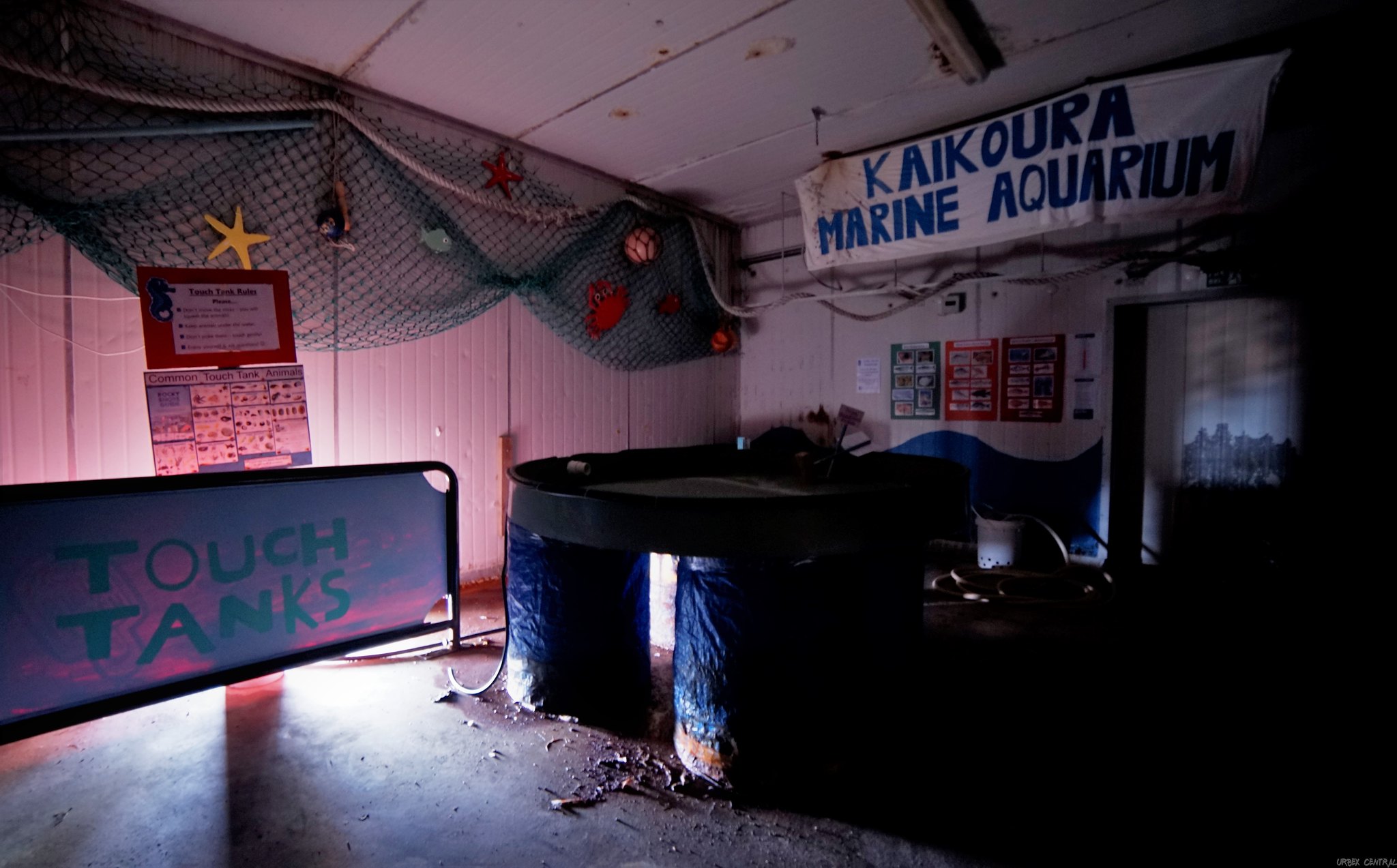
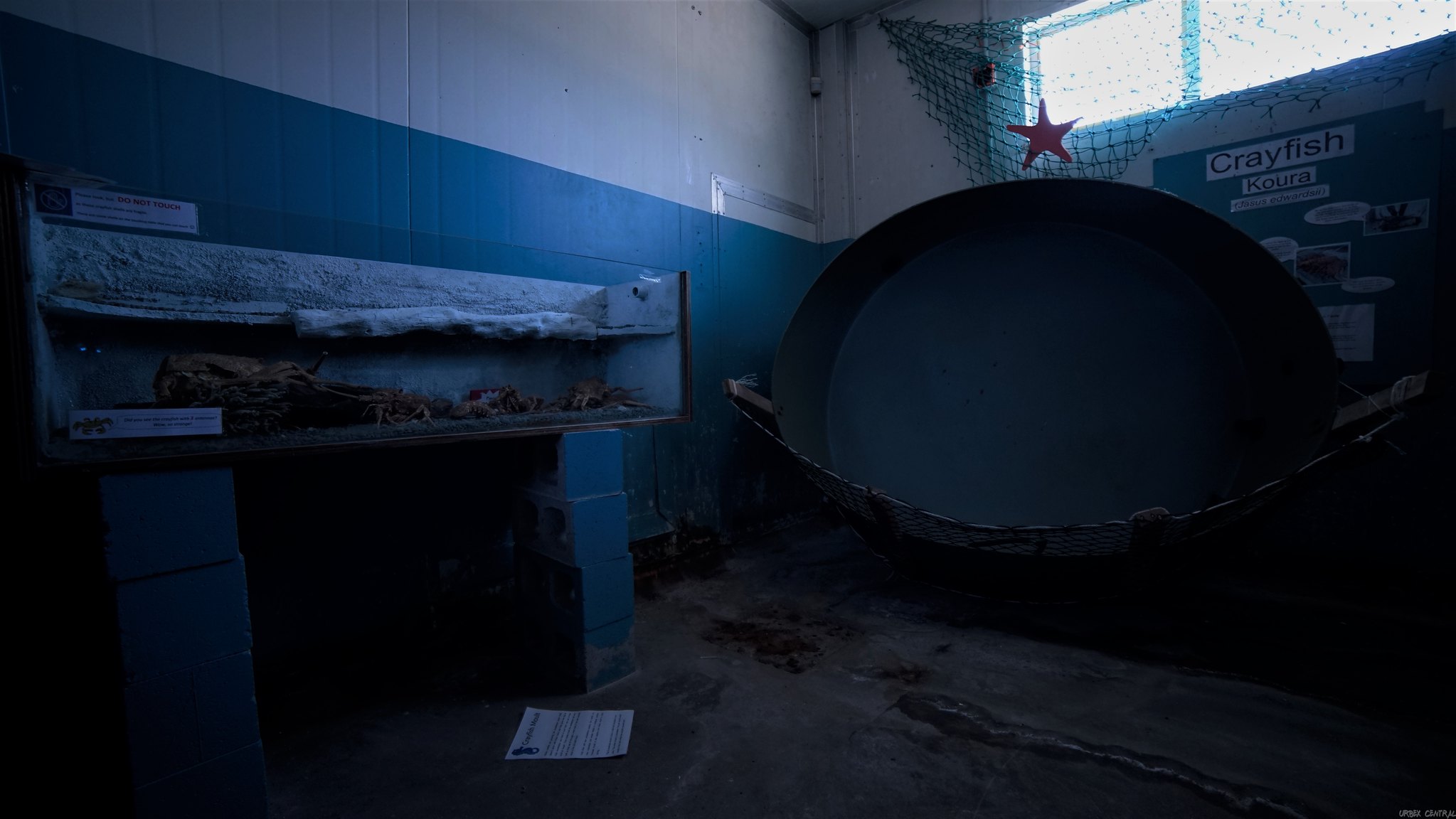
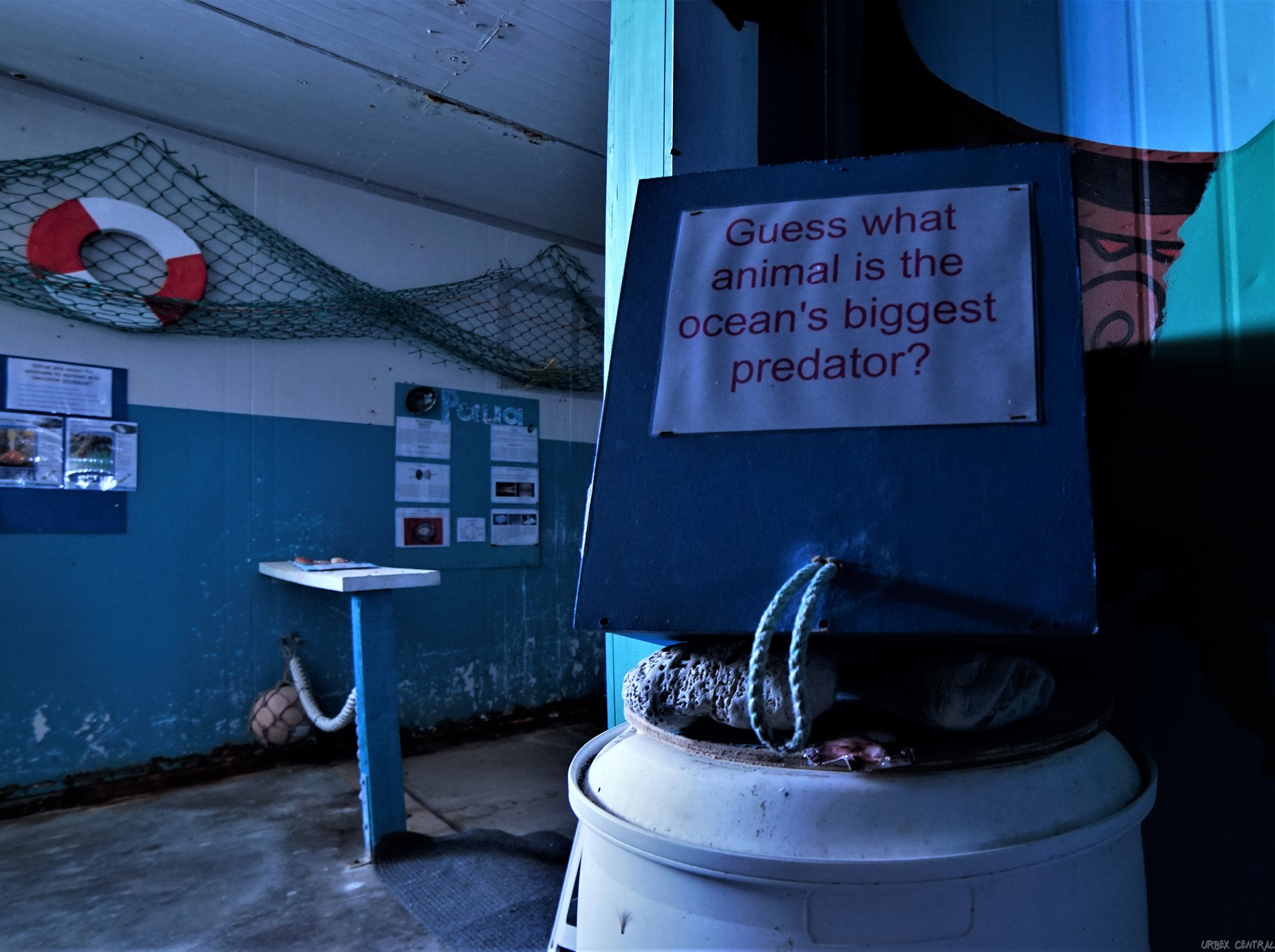
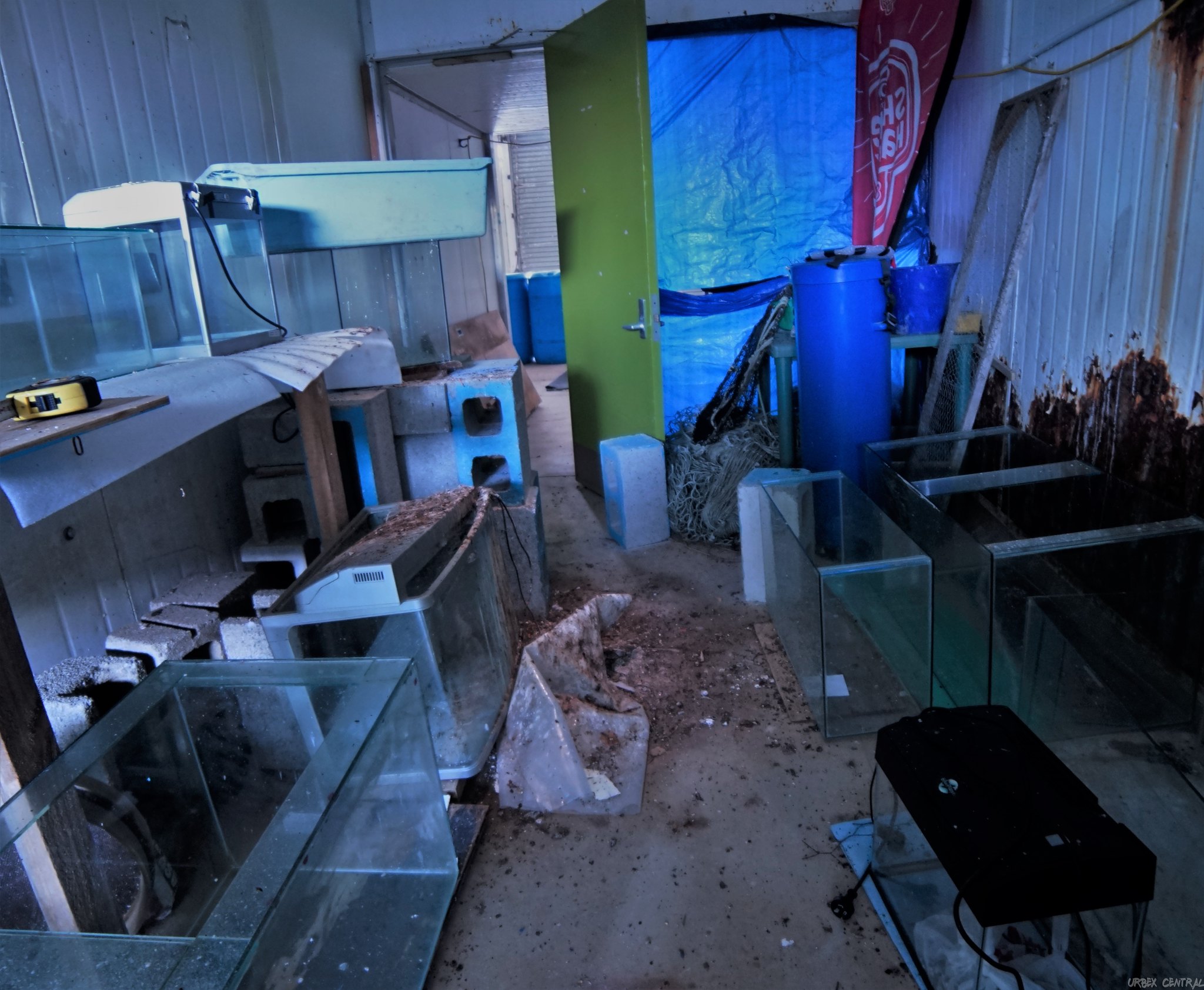
Abandoned Aquarium
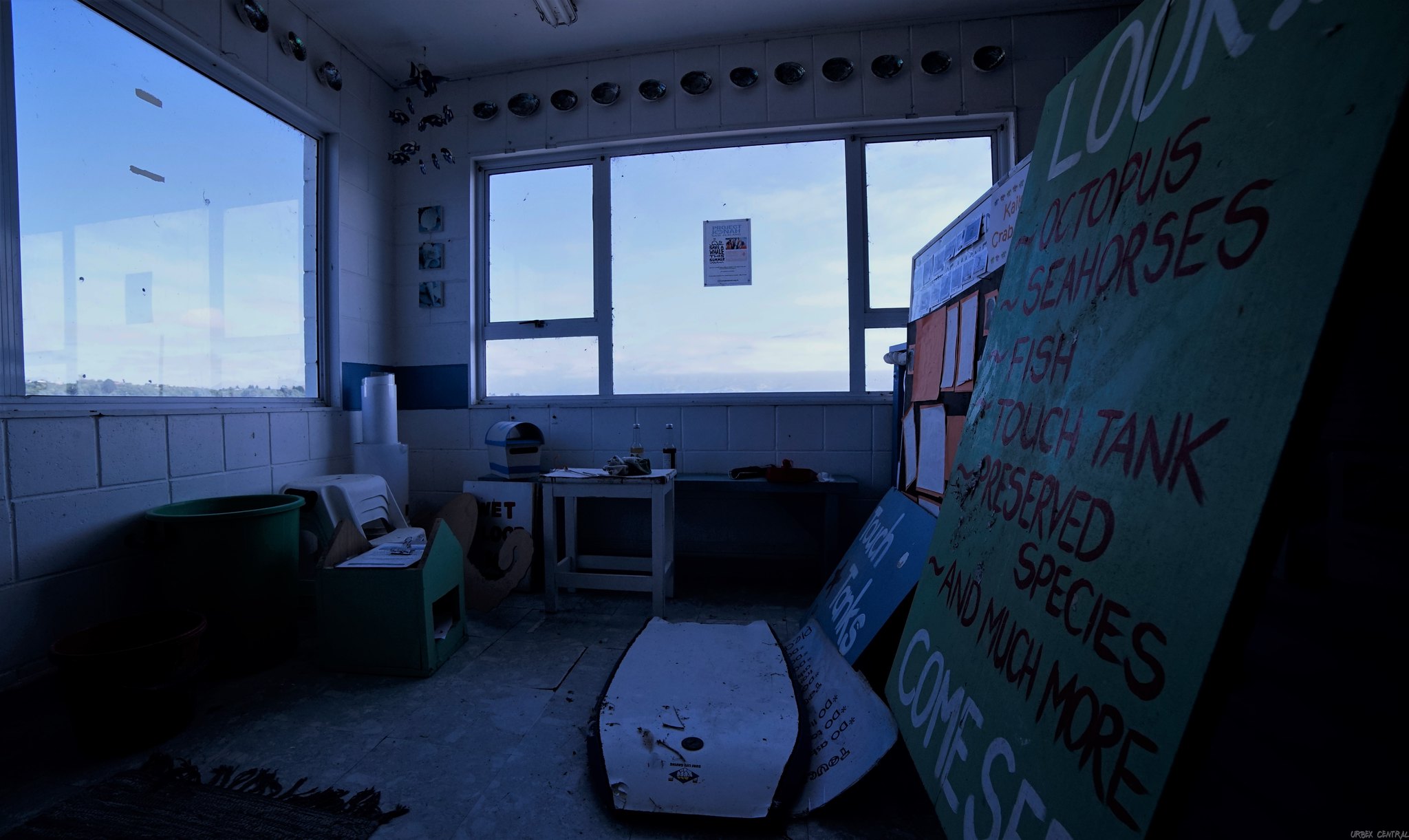
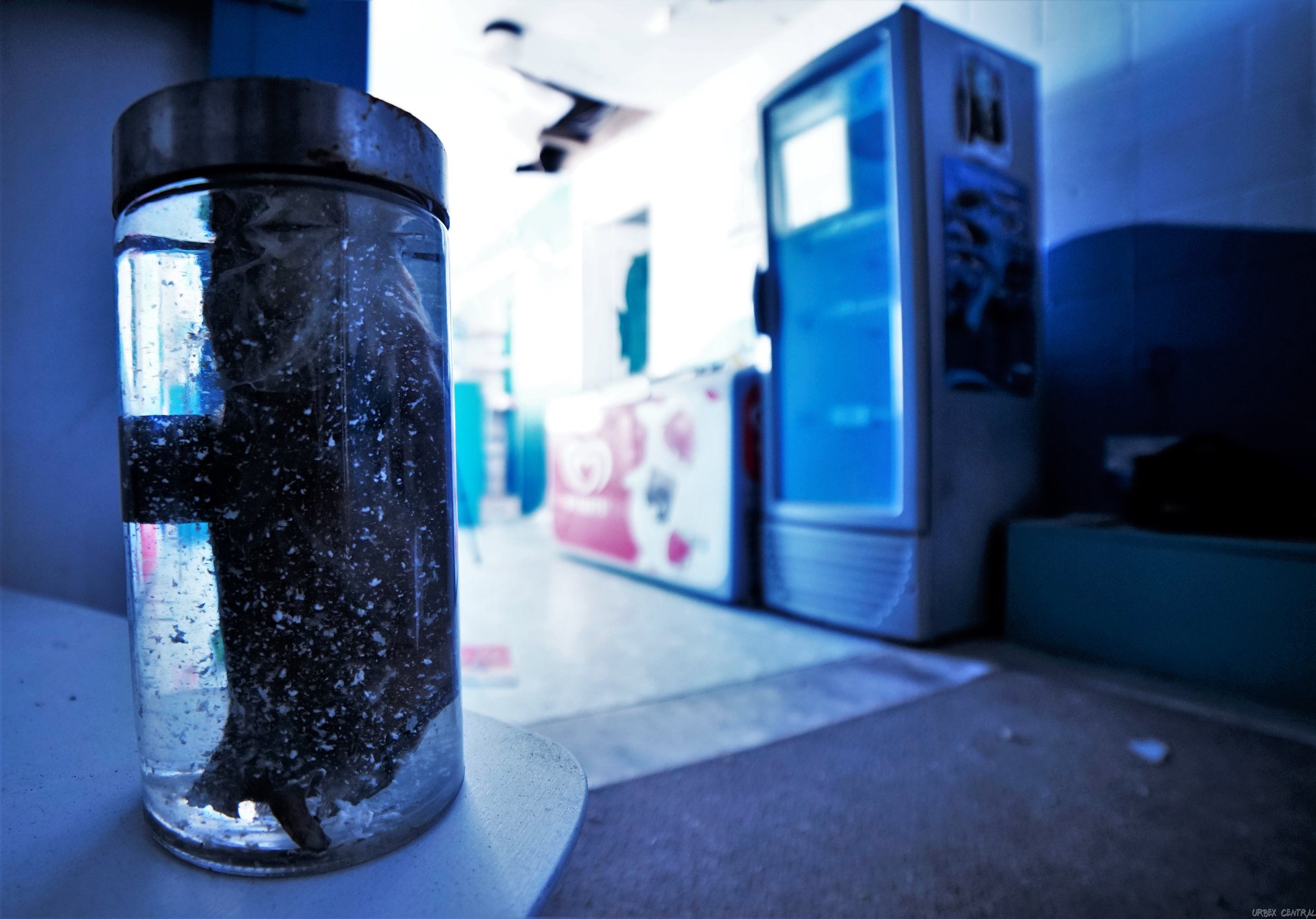
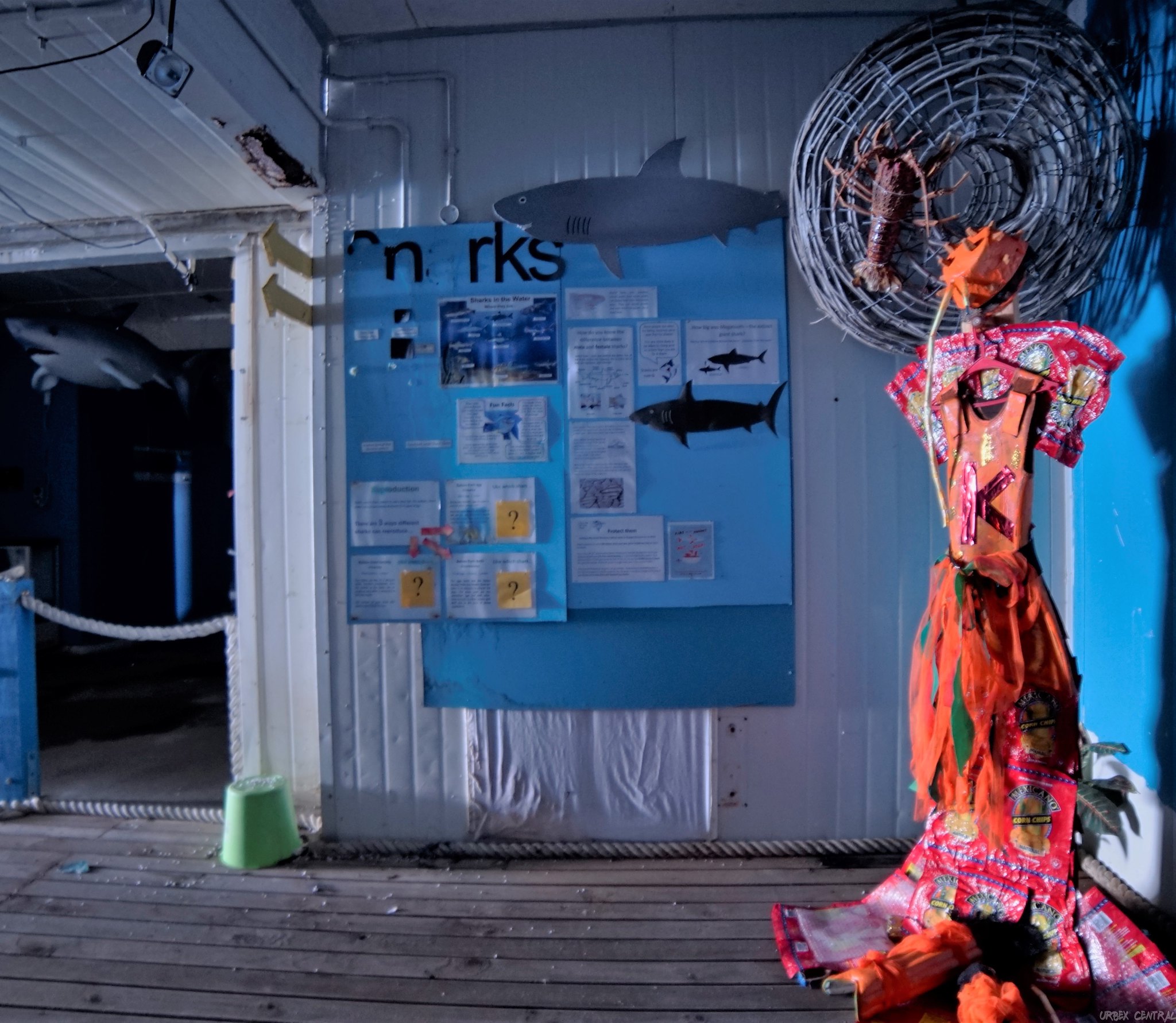
Located in a sleepy town that has had its fair share of earthquakes lies this little aquarium on the wharf, abandoned and closed down due to earthquake damage. In operation, it seems the aquarium was well loved and although small was full of interactive activities for children who visited.
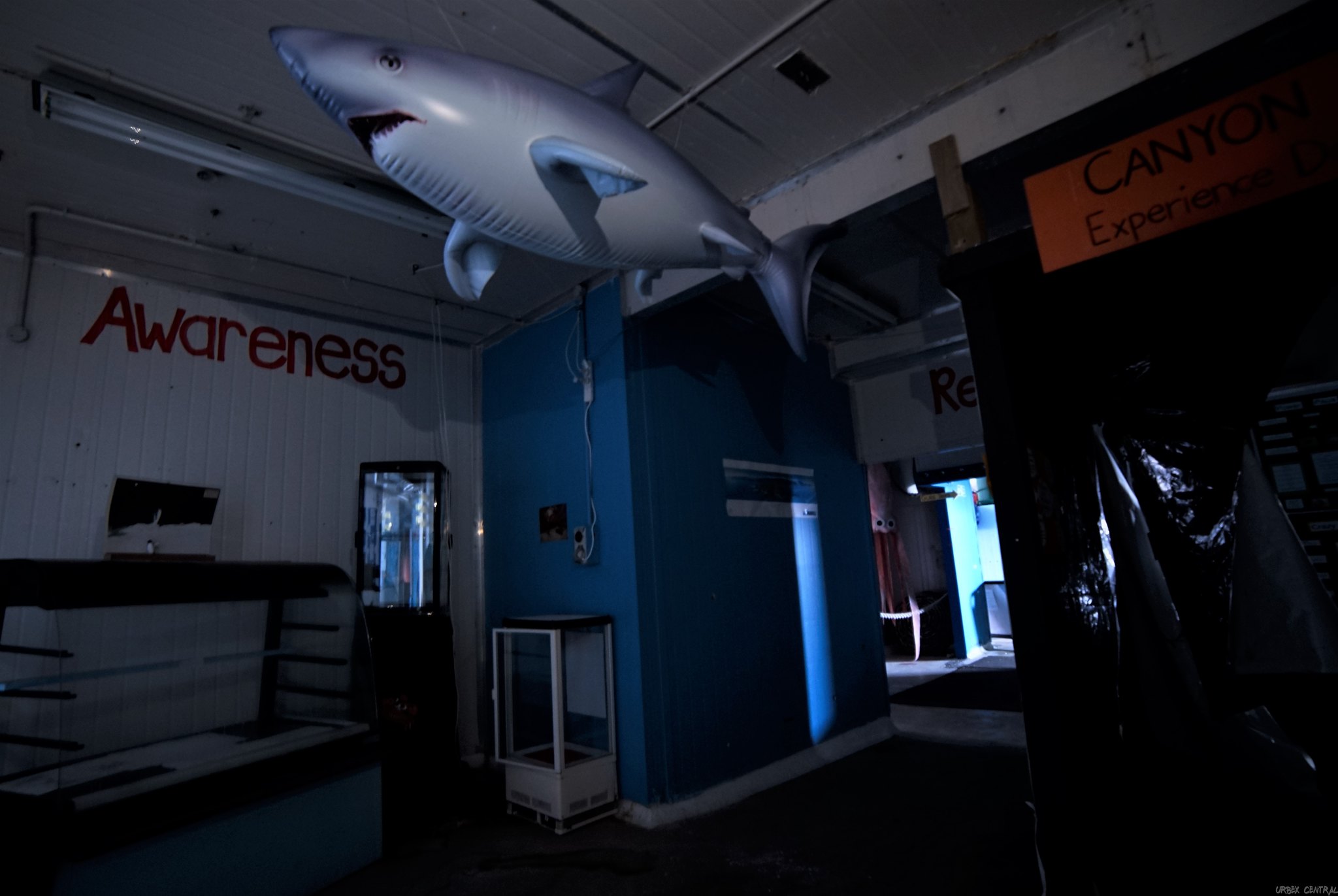
Due to an injury this explore posed a little bit of a challenge to UC but thanks to fellow explorer DerelictNZ we were able to successfully explore this place and enjoy its wonder; such as an inflatable shark, not quite the infamous Melbourne shark but close enough.

Waterpark
Late last year we explored the abandoned waterpark “Ho Thuy Tien” near Hue, Vietnam. This place has been fairly well documented by UE and backpackers before, so to mix things up a bit we decided to predominately explore the park via bicycle- and we’re talking about the old school one speed bicycle variety with a basket on the handle bars.
It took 30-40 minutes in the heat & humidity to bike there from Hue city, courtesy of Google Maps. At the main gate we were surprisingly waved through by a guard. We were expecting a “fee” like all other locals and visitors alike. Perhaps he felt because we’d biked all the way out there we deserved the “free” entry- what ever the case it was good karma. Locals we spoke to later just could not believe we’d been given “free” entry.
Closed a decade ago- probably because of the high priced tickets and lack of attractions- the park has over the years become a hang out for local youth, urban explorers, backpackers, and on weekends (in this case) a bus load of students. Apart from getting the neck slit gesture after outstaying our welcome at some local lads bbq on top of the waterslide section- it was a safe and surreal experience- and then we had to bike all the way back to town…
Black Palace
“Black Palace” (Damnak Sla Khmao) was a little summer palace of King Sihanouk, abandoned sometime in the late 1960’s or early 1970’s. It’s located on Bokor Hill Station in southern Cambodia. The “Palace” itself is not on a grand scale, but the overall spectacular location and many outer buildings must have been fairly impressive in its day.
The hill station was built as a resort by colonial French settlers as an escape from the heat, humidity and general insalubrity of Phnom Penh. Nine hundred lives were lost in the nine months during the construction of the resort in this remote mountain location.
The centrepiece of the resort was the grand Bokor Palace Hotel (which has never been a casino) inaugurated in 1925. See previous video- “Casino Rouge”. It was used as the location for the final showdown of the excellent Matt Dillon 2002 movie, “City Of Ghosts”.
Bokor Hill was abandoned first by the French in late 1940s, during the First Indochina War, because of local insurrections guided by the Khmer Issarak. It was only in 1962, for the reopening of the “Cité du Bokor”, that a casino was established in the new hotels near the lake, (Hotels Sangkum and Kiri). Some buildings were added at this time: an annex for the palace, the mayor’s office and a strange mushroomed concrete parasol.
The Bokor mountain was abandoned again in 1972, as Khmer Rouge took over the area. During the Vietnamese invasion in 1979, Khmer Rouge entrenched themselves and held on tightly for months. In the 1990s Bokor Hill was still one of the last strongholds of Khmer Rouge.
Expired
This large (by NZ standards) purpose built former tertiary institute expired at around the same time this Kodak Ektar 64T film did. And just like this 35mm expired film, it is apparently getting another lease of life. There are new owners and supposedly new occupants- but the only life we saw were some homies running their dogs (who tried to have a go at us); an alleged owner who asked what we were taking photos of (selfies of course) & told us to leave; and an elderly security guard who said- just leave. One of UC have a particular connection to this place, having kind of studied (sic) here when it was still a place of education- not stagnation.


Casino Rouge
Exploring the ruin of the French colonial era Bokor Casino Hotel in Cambodia recently. The Casino was fought over by the invading/liberating Vietnamese army and the murderous Khmer Rouge from 1979 onwards. Due to it’s strategic place and size on Bokor plateau it was invaluable to either side to gain an advantage over the other. In recent years it has been cleaned up and somewhat structurally improved- unfortunately removing most of its neglected charm, tragedy and history in the process.
Church : Time
Exploring the abandoned former French colonial era church on Bokor Mountain in Cambodia recently. In 1978 the Vietnamese invaded Cambodia, toppling the murderous Khmer Rouge in a matter of weeks. There was however a stalemate for a time on Bokor (and other locations) as the Vietnamese and the Khmer Rouge battled it out- fighting between the church and nearby casino. In recent years the church has had occasional use- it’s first in nearly four decades. “Nobody knows the trouble I’ve seen…”
The Ghost Tower
 The Sathorn Unique (aka the Ghost Tower) is a 185 meter 49 story unfinished skyscaper in downtown Bangkok near the Chao Phraya river. The proposed luxury condominium tower was designed and developed by prominent architect and real estate developer Rangsan Torsuwan. By 1997 construction was estimated to be 80–90 percent complete when the Asian financial crisis hit. Bangkok’s real estate market collapsed, and the finance companies that had funded the project went bankrupt and were subsequently liquidated. Building construction projects across the city came to a halt and Bangkok was left with over 300 unfinished high-rise projects. However since then most of these buildings have been completed as the economy recovered- but the Sathorn Unique remains a ghost tower…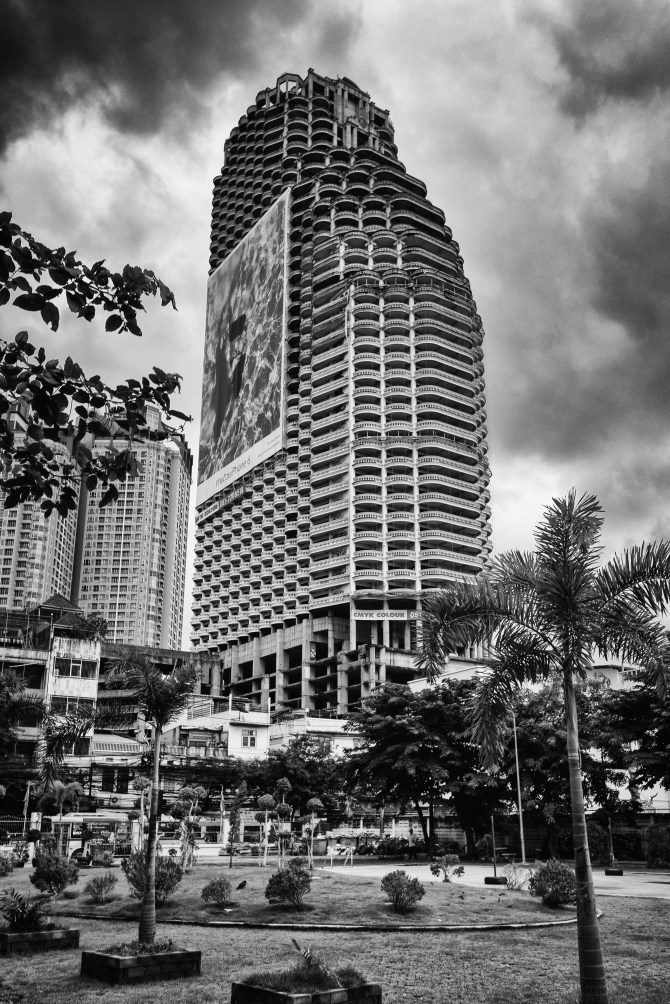
There are numerous urban legends and superstitions regarding the Sathorn held by people in the nearby community and Bangkok in general. Some believe the building was doomed from the beginning as the land upon which it sits is a former graveyard. Others believe that due to the Sathorn Unique’s shadow falling over the neighboring Wat Yan Nawa, that this brings it bad luck, resulting in its failed completion. After almost two decades and no completion in sight, perhaps there is something to these superstitions after all.
Over the years the Sathorn has become known a bit of an urban exploration mecca, so late last year while in Bangkok we thought we’d pay it a visit. Despite being officially off-limits to the public, access reportedly could be gained by finding your own way in- or bribing a security guard to let you in- we preferred the former. We found the building easily enough, you just have to look up. Unfortunately our timing couldn’t have been worse and was only out by a month or two, as the surrounding fence had been rebuilt and reinforced and certain security guards sacked- no one can enter now (unless your Spiderman) no matter what bribe is offered.
This appears to have occurred due to a number of factors; the increased popularity of the tower, the number of photos, videos and articles popping up on line- and the death of a tourist. In December 2014 the body of a Swedish man was found hanging on the 43rd floor. The cause of death was determined to be suicide, though the news prompted discussion regarding the safety and security of the building. Then in September 2015, Sathorn Unique Co. made known they had filed criminal charges of trespassing against five people who had posted material on the Web, including a pair of tourists who had created a video of themselves freerunning on the tower. They said that this was done in order to set an example and deter people from climbing the building. They added that the number of people illegally entering the premises had risen sharply during the past year, following an increase in online exposure, with over a hundred people entering on some weekends.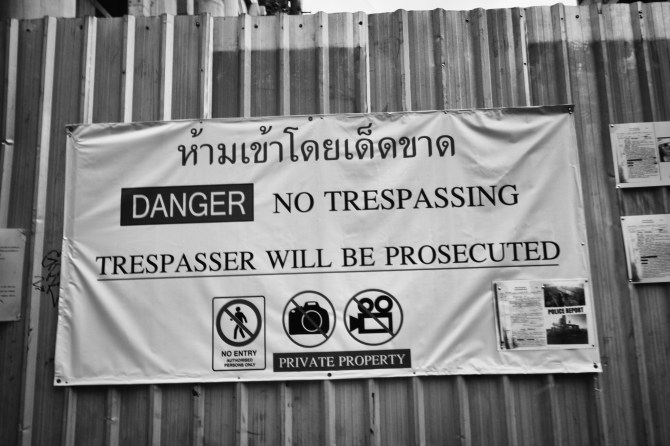
So at present the Ghost Tower seems to have been finally left for the ghosts to accommodate- but perhaps the future will offer opportunities for a return of the living…
Nokor
Not your usual urbex video, but exploring ruins nonetheless. This is the strange fusion temple complex of Banteay Prey Nokor in Cambodia that we visited late last year. Situated in countryside near the town of Kompong Cham, the original 11th century Mahayana Buddhist shrine has been added onto over the centuries and incorporated into a bewildering and sprawling complex of wat’s and stupa’s. Apart from a security guard and a couple of monks we had the place to ourselves. More to come from Cambodia soon…
Abandoned Polytechnic
Sitting unused and idle for the last 14 years after closing in 2001 and sitting next to an active military base, this old polytech has been a joy to explore and take photos.
Throughout our many visits to this location over the years we have found ourselves discovering different classrooms and lecture theatres each time, this old polytech used to host courses in dental, engineering, telecommunications and radiation therapy.
Enjoy the photos, this derelict campus has recently been sold by the ministry of education and is about to be redeveloped.


The Farm
Inside an abandoned former catholic girls school/farm/’rehabilitation unit’ we visited in mid 2013. Founded by a French sisterhood in 1953 -“the girls who came into the care of the sisters often had problems that could not be resolved in their normal environment and needed the loving care of others to restore their sense of self-worth.” The first residents stayed at the ’13’-room Manor built by its previous owner; and over the years the Catholic order embarked on a building program that included a 25-girl dormitory, two-story working/training block, visitor accommodation and sports facility. The last building was an expanded convent for the growing number of sisters at the facility. At it’s peak there were apparently up to 50 nuns in the house, and at least 70 girls. The farm/school/borstal/convent finally closed down in the early 1980’s.


Bridge To Nowhere
October 2013: There was no point in trying to talk Gunner out of surmounting yet another obstacle- an historic abandoned suspension bridge.


Quarantined
This former quarantine station was first opened in 1872 for people arriving New Zealand with contagious diseases. The facilities were refurbished and extended in 1918-19 and were maintained in readiness until World War II (1939-45) but were little used. The accommodation blocks were used in both World War I and World War II to house interned “enemy aliens”. For over 100 years, beginning in the early 1880s, it also served as an animal quarantine station. Animals arriving in New Zealand from other countries were quarantined on the island for 30–60 days to check they were free of disease. Blood samples were taken regularly and tested. Each animal was also treated for internal and external parasites.
In 1971 this particular facility, a maximum security animal quarantine station was completed. Until then, New Zealand had only ever imported livestock from Britain, Australia and Canada. The idea of a maximum security animal station was to enable scientists and geneticists to study new exotic breeds from outside of these ‘safe’ countries. When the station received its first shipment of animals in March 1972, it was the most sophisticated facility of its kind in the world. This allowed for the importation of a more diverse range of exotic animals such as elk, red deer, alpaca and llama, and capacity to hold more of the traditional imported livestock. In 1985 a scheme was introduced to import ova and embryos of cattle, sheep, and goats for implantation into New Zealand livestock. This inadvertently lessened the need for quarantine stations. It meant that existing livestock lines could be diversified rather than relying on importing. The quarantine station was closed in 1995.
II Casino
We explored this former Italian restaurant two years ago, just prior to demolition. Remiro Bresolin, a flamboyant pioneer of Italian cuisine in New Zealand and legend of Wellington’s social scene, took drab Wellington and gave it a splash of Italian colour. For nearly 30 years his Il Casino restaurant was a capital icon and a mecca for food lovers everywhere. The restaurant closed just prior to his death in 2007 and in it’s place now stands another inner city apartment block.


Vacancy
This former conference and accommodation complex- closed due to being “earthquake prone”- is still very, very vacant…
Escuela Mala
A re-posted video of Petone College from early 2013. This former high school- abandoned, vandalized and the victim of numerous arson attacks- has finally been euthanized to make way for a retirement village. Escuela Mala loosely translates as “bad school” in Spanish.
Bad Education (redux)
One of our old haunts has finally been demolished. Hutt Valley High School (formerly Petone Technical College) was closed in 1998, but partially used up until 2002. The site had been heavily vandalized over the years and targeted on a number of occasions by arsonists- most recently this past January. This last fire was the nail in the coffin for the former school. The remaining buildings were demolished last month to make way for (ironically) a retirement village.


Gunkanjima
One of us was lucky enough to visit legendary “Gunkanjima” a few years ago. Hashima Island, known locally as Gunkanjima (Battleship Island)- is situated off the coast of Japan near Nagasaki. Mitsubishi purchased the island in 1890 and began the project of extracting coal from undersea mines. They built Japan’s first large concrete building (9 stories high) in 1916 to accommodate the burgeoning ranks of workers. Concrete was specifically used to protect against typhoon destruction. In 1959, the 6.3-hectare (16-acre) island’s population reached its peak of 5,259, with a population density of 835 people per hectare for the whole island. As petroleum replaced coal in the 1960s, coal mines began shutting down all over the country, and Hashima’s mines were no exception. Mitsubishi officially announced the closure of the mines in 1974, with the local workers/inhabitants having to vacate their island fortress immediately.
Gunkanjima is increasingly gaining international attention, not only for its modern regional heritage, but also for the undisturbed housing complex remnants representative of the period. In the 2012 James Bond film Skyfall, the island served as an inspiration for the lair of villain Raoul Silva, but filming did not take place on the island itself. One section was recreated at Pinewood Studios in England and the rest via CGI. In 2013, Google sent an employee to the island with a Street View backpack to capture its condition in panoramic 360-degree views and allow users to take a virtual walk across the island. Google also used its Business Photos technology to let users look inside the abandoned buildings, complete with old black-and-white TVs and discarded soda bottles.

Battleship Island


The Lost Resort
Anyone visiting Rarotonga for more than a few days, will probably have heard of (or seen) the doomed and abandoned Sheraton resort on the south coast. For a tiny country (pop. 14,600) which earns half of its income from tourism, completing the project is seen as vital.
The history of the project dates back to 1987 when the Cook Islands Government signed a deal with an Italian bank, after being unable to attract the required foreign investment. The Government acted as guarantors for the NZ$52 million loan and agreed to an Italian company’s bid to build Rarotonga’s first luxury 5-star 200-suite hotel and golf course. Sheraton signed up to manage the property and work began on its construction in 1990.
However within a few years, the lion’s share of $52 million disappeared down a black hole carved out by the mafia and other crooks- the project was 80% complete when the insurance firm cut off funding to the builders. Since then, Rarotongans have seen a steady flow of foreign receivers, consultants, con men, lawyers, bankers and developers trying to figure out what to do with the site. The country’s finances were crippled as the government’s liability ballooned to $122 million, and taxpayers are still saddled with the interest bill. The issue of who owns the hotel has been stuck in the courts for years.
Many locals think the project was doomed from the beginning, after a curse was thrown on the site in 1911- after More Uriatua was shot dead by William John Wigmore, following a bitter argument over ownership of the land. At the project’s official launch, Metua More’s grandson, More Rua turned up dressed as a high priest in warlike regalia, intoning the resurrection of his grandmother’s curse. He ended by slamming his spear into a rock onto which a plaque had just been unveiled by the Prime Minister, marking the beginning of the Sheraton project. When the rock split to ground level, the locals saw it as a sign that the resort was still cursed and doomed. It still lies abandoned and derelict today, with no new grand plans of completing The Lost Resort.


Psych
This former notorious rural psychiatric hospital- see this post- was visited by one of our group back in 2008. The majority of the buildings then were mostly intact with minimum vandalism. Today many of the buildings have been demolished, with the remainder largely abandoned or used as storage. Incredibly though a number of the villa’s are now reoccupied, by apparently sane people.




Decrypt
Egypt, Dec 2005: Inspecting some ancient tombs on the westbank of the Nile- across from Aswan. They were completely off the tourist trail and not mentioned in any guidebooks. We eventually found a man who had keys to them and he let us in for a look- after a certain amount of “baksheesh” was paid. One tomb was for the overseer of Kom from approx 191bc- another dated way back, at least 4000 years…
 U R B E X C E N T R A L