On The Air

The most comprehensive effort we’ve yet made to capture the experience of a climb. This is a viaduct in Aotearoa New Zealand. The edit features two separate perspectives: the climber’s point of view and that of an observing drone.

Part One: Someone Up There [0:00] Climbing has always created certain vistas of landscapes which would otherwise remain unseen. Climbing is also a human experience. A landscape is transformed into an obstacle by the simple fact that there is someone finding their way up there. This edit is a chance for the viewer to watch as one human watches another human navigating a landscape.

Part Two: Within Our Grasp [8:40] It is natural for us to reach for whatever lies within our grasp. POV videography allows someone to reach on behalf of others. Thanks for accompanying us as we reach for new experiences.

Part Three: A Delicate Crossing [17:38] Ahead is a native timber walkway too perished to be trustworthy; to the left is a steel guttering constructed 1896—1902, to the right a loose-hanging cable that is more a comfort than a protection; below are steel girders ranging from a little over a foot’s width to a little under, and below them nothing but airspace behind which a charcoal-blue tinted river glints among a green landscape.

The Feeling Is Mutual

From the 1880’s through to World War 2, beautiful vistas along New Zealand’s coastline were rededicated to defence fortifications. This South Island observation room is isolated from its accompanying gun pits, which are within the perimeter of an active industrial site. The bombing style graffiti included a sweet message refreshingly at odds with the site’s military past.

Pastoral Arts

Elvis was the tender age of 19 when he recorded “That’s Alright Mama” in “a new, distinctive style” on the Sun label. Many of the arrivals at this commune founded in 1973 were of a similar age, seeking to live in a new, distinctive style under the sun. A painter’s easel stands overlooking the hillside on which the communal meeting house was built, and the nearby house still contains once-cherished paintings and art books.

From Ten To Two

Built in the late 1880s, this 1.1 kilometre tunnel was completed some years before the construction of the rail lines it ultimately served, which eventually snaked their way south to meet it. Located in an area described as “an unpeopled wilderness”, it required a township of workers to be established and a brickworks created. Additional materials were brought in by canoe to Te Kuiti and by rail to the Puniu river, and hauled from there to the worksite by horses. After the work was completed, and trains were not yet running south of Te Kuiti, the access roads and tunnel had a life for some years as a road for horsemen and pack-animals bound for the southern parts of the King Country. Traversing the tunnel was memorably described as “an uncomfortable experience . . . get[ting] a packhorse bogged in the stiff clay . . . through the black dripping hole in the hill.”

130 years after its construction, and 40 since its abandonment, the dripping continues, and the clay is still incredibly boggy.

Thanks to The Forsaken Explorer NZ for directing me when I got a little lost on the hunt: https://www.youtube.com/channel/UCsDB2AmI-Lr4EhHOgZxA7Ag

Butt of a Joke

Māori history records that long before this 1.2 kilometre, late 1880s-era tunnel was built, the chief Tarau, heading southward, climbed the range through which the tunnel now passes, situated near the upper Ongarue Valley in the Waitomo region of New Zealand. His subjects dutifully followed their chief, in single file. Mirth must have spread down the line of travellers about Tarau exposing his backside (“poro”) as he bent to the task of scaling the steep hill. And so that place, and the tunnel which was later dug through it, operating for nearly a century until 1980, acquired a colourful name: Poro-A-Tarau — “the posterior of Tarau”. It was a place where a chief exposed his rear end, becoming literally the butt of a joke.

Congratulations to The Forsaken Explorer NZ, Urban Kiwiana and KEWM for tracking down Poro-A-Tarau last year, and special thanks to The Forsaken Explorer NZ who promptly and kindly directed me when I had lost my way. Links to their videos of the tunnel are below.

https://www.youtube.com/watch?v=VQh4_nK0r7s
https://www.youtube.com/watch?v=66KJ7nEdyeA&t=3s
https://www.youtube.com/watch?v=96a8bm7oifI&t=34s
https://www.youtube.com/watch?v=R9lv1ucPRlQ
https://www.youtube.com/watch?v=SS6uFvBpcgQ&t=540s

Out of Bounds

Welcome to the complete document of our explore of this huge campus of four prison units abandoned in 2012 and currently being demolished.

Part One: “Out Of Bounds” [0:00] Prisons have existed on this site for nearly a century. During the Second World War, conscientious objectors were detained here. In the 1950s the site housed a prison farm which was further developed in the late 1970s. The scale of the site — thousands of hectares of commercial and native forests, farms, wetlands and a river — meant that a perimeter fence was impractical, deemed only ever suitable to house up to 600 inmates at a minimum to medium security level. From 1998 the prison began to suffer repetitional damage, with a seizure of almost $1 million worth of cannabis plants growing on site, a buckets-for-toilets scandal, two inmate drownings involving Māori cultural training, canoes and parachutes, and a guard convicted of supplying cannabis to a prisoner in return for a bribe. The closure of this unit – one of four we visited as the autumn sun was falling fast – was announced in 2012, and the land and its buildings have now been returned to their original owners. No signs of the commencement of demolition were then evident, and — gratifyingly — no signs of vandalism. A 360-degree panoramic mural painted around the walls of the dining hall conveys a sense of geographical placement among the majestic landscapes beyond the perimeter of confinement, tantalisingly out of reach.

Part Two: “Man With Short Arms” [6:30] Perhaps some kind of neuroscience was at play in this choice of images — SpongeBob SquarePants meets the lost city of Atlantis — for a mural painted along the back corridor of the isolation cells of this unit. Presumably intended to calm disruptive prisoners, and engage painterly ones, further intriguing murals adorn the cold cell walls: a man pruning the limb of a tree so anatomically uniform that he might just as likely be an electrician working on wires strung from a lamp post; a Māori wahine wearing a pounamu and a kākahu feather cloak — barefoot on a pedestal — turning her face to the light; a man surveying his upcoming twisting traverse into a landscape crowned by an active volcano, with only a briefcase to sustain him; and the man with short arms — seemingly ill-equipped to utilise the key to freedom that lies beside his truncated frame with its enormous feet.

Part Three: “Traces of Time” [11:49] From the window of #55, an informed eye studies the moody skies above the central courtyard. Glenn’s 1972 Christmas present — The World Encyclopedia of the Film — languishes in #11, its front cover torn off but not yet discarded. #18 plays host to a brown-crayoned face, mouth agape as if inviting the throwing of ping pong balls at a fairground amusement. Nearby a grey-bearded pig farmer and an athletic woman carrying groceries seem to be missing an opportunity to converse at the fence line. Monied wanderlust is palpable in #16, where a shrine to cars, boats and exotic getaways gleams under fluorescent light. Outside Sunday church services advertise the promise of personal transformation via belief in a higher power, while inside #37 another route to growth is being chosen. The number of 5 — denoting maximum difficulty — is written into every column associated with expressing affection towards anyone from an intimate partner to a shop assistant.

Part Four: “But They Can Die” [16:30] The pigs of George Orwell’s Animal Farm proclaimed, “All animals are equal, but some animals are more equal than others”. Pigs are similarly the object of resentment in under-the-mattress graffiti in Cell #26 of this former prison. The poem begins burnt into the wood: Pigs CAN’T FLY and continues in blue pen: BUT THEY CAN DIE NEXT FINE DAY BLOW A Pig away IF YOU KILL A Pig a day it WILL Keep the doctor away Nowhere more clearly did we find articulated the smouldering frustration of incarceration, channeled into the kind of blind hatred that negates any opportunity for insight. Elsewhere was a mixture of light and shade. In the kitchen the relative gentleness of a rainbow framing the extractor fan was juxtaposed with murals depicting fearsome hyper-masculine muscularity. No such diverting decor was provided for prisoners in solitary confinement, who were required to surrender their tobacco products and were issued with fresh water, a chamber pot, one mattress, one pillow, one pillow slip, one sheet, and blankets or duvet “in accordance with climactic conditions”. How some of them obtained implements sharp and sturdy enough to partially chisel their gang names and insignia into the stone walls and into the paint of their cell bars and doors is anyone’s guess. Puzzling at what we had experienced, and all the more aware of our own freedom of movement and expression, we walked for ninety minutes back down the road through pine forests to where we’d parked our car.

Across Time

This viaduct was built in 1908 during the ‘Age of Steel’, when steel plates, beams, girders and trusses held together with bolts and rivets were seen as the answer to almost all engineering problems. Curving elegantly amongst notoriously difficult terrain, it consists of steel lattice and mass concrete piers interspersed with Pratt truss and plate steel girders. It remained in use until 1987 when it was superseded by a creation of the ‘Age of Concrete’ as part of the electrification of the North Island Main Trunk (NIMT). At that time the decking was removed, and since then it has remained in the landscape as an inspiring site of groundbreaking New Zealand engineering history.

Hive Minds

Nearly four decades ago, collectively-minded communities of bees regularly filled these wooden beehives. The hives were painstakingly emptied and their contents weighed and processed in this beekeepers’ workshop. This organic, systemic process can be seen as a microcosm of the commune within which the workshop was situated. Up to seven couples with children resided here at any one time from 1973 to about 2000. They collaborated on self-sustaining endeavours such as dairying, making butter and soft cheese, harvesting, hunting, generating hydro-electric power and beekeeping. Their honey had a branded label which is still proudly stuck to a window in one of the former commune residences. Presumably manufacturing honey was a much-needed commercial interface with the outside world, where in-house produce could be sold for money.

According to records marked on a chalkboard inside, April 1993 appears to be when beekeeping operations ceased. A quarter of a century later, a falling pine tree has done its utmost to topple the workshop, and the whole commune sits decaying in the landscape, somewhat like a giant set of deserted beehives. The ‘hive mind’ of the commune has fragmented and dispersed. Or rather, it has shifted shape. A stream of ants is relentlessly appropriating the remnants of the 1993 honeycomb, hauling tiny piece by tiny piece back to its nest. Given enough years, the ants alone will demolish all that remains of this once-prosperous collaboration between humans and nature.

MX3030

Cars up trees: it’s a sight that still confounds, even half a decade after we first visited this odd scene. Above where the cars now lie is a cliff, beyond which is a sharp bend in the road. Stolen cars have been sent airborne over the edge – ‘Thelma and Louise’ style – since the 1960s. It appears the landowners and their local council still haven’t yet agreed who bears responsibility for resolving this mangled mess. And so the cars steadily are rusting their way into the ground – or at least the ones that managed to set wheels on the ground after their joyride.

Raw

For music, just the fizzing of cicadas on a hot summer day, and our footsteps ringing out in the cool air inside this 1876-built tunnel which was closed in 1955 after a deviation in the rail line it served.

Down River

An important aspect in understanding residents’ lives at this commune from its founding in 1973 to its abandonment in about 2000 was to locate and traverse their river access. The river was their source of hydration, cleanliness, spirituality, and even the electric light in their homes once they’d installed a generator at the dam. So early one misty morning, we set out to divine for water.

Pentagonal Dreams

The dome ceiling of the upper floor of this meeting house of a commune founded in 1973 and abandoned about 2000 is designed as an expression of mystical geometry. Pentagonal and triangular windows intersect with hexagonal timber patterns. It must have been quite a trippy place to take a nap: regrettably the bed is now utterly squalid.

#12

This former rail tunnel has sat abandoned since 1900. It is now three-quarters buried by the earth, and half-flooded. Distinctive arrow imprints on the red and brown clay bricks indicate the presence of prison labourers in its construction. Prisoners serving terms with hard labour wore arrows on their uniforms to visually distinguish them from civilian workers, and they marked their handmade bricks with arrows, as a kind of self-portrait. Finding this tunnel was a team effort involving anecdotes from rail workers, hand-drawn maps of enthusiasts, and – finally – simply groping through thick vines in search of the source of faint sounds of trickling water. The entrances are completely obscured in dense overgrowth. The thrill of finding something so untouched for so long is indescribable.

Ohu

This former commune was founded in 1973. At the time of its closure around 2000 it was the most longstanding of eight communities set up around New Zealand under the Ohu Scheme umbrella. Labour Prime Minister Norman Kirk approved the scheme in which young adults could channel their disenchantment with urban life into forming intentional communities centred around a ‘back to the land’ ethos.

Ohu is a Māori word meaning ‘communal work group’. Ohu communes were set up on unused Crown land, with their residents paying leases matching those of farmers grazing their livestock on government-owned land. Some saw the Ohu Scheme as a calculated initiative to remove radicals from urban settings, while its stated objectives were: to assist people in becoming self-sufficient from the land; to enhance people’s spiritual and social wellbeing; to reconnect people to the land; to give people a chance to develop alternative social models; to provide a communal environment as a potential antidote to the ills of modern society; the promotion of the virtues of a simpler life; to be a place of healing for participants as well as for society as a whole.

The area in which this ohu commune was situated had originally been gifted to servicemen returning after World War One. However, by the time of World War Two, the land was abandoned and the access track winding its way through steep terrain steadily returned to bush. It took the 1970’s ohu founders three months of hand cutting and digging to rehabilitate the track sufficiently to allow even horses to reach the ohu site. Over the course of its lifetime, up to five couples with children lived at any one time at the ohu, and undertook a range of initiatives to explore self-sufficiency, including gardening, bee keeping, dairying, manufacturing butter and soft cheese and hunting meat. Quirky DIY housing flourished in a climate of limited resources, salvaged materials, amateur architects and builders, and a relaxed attitude towards regulations. The central meeting house was an exceptional architectural achievement. Its circular form, pentagonal upper floor and feature windows, and domed timber ceiling constructed of triangles forming interlocking hexagons speaks to the utopian ideals of its community and era. It now cuts a lone, striking figure amidst a rewilded landscape.

By 2000, the same forces of isolation and endless hard manual labour that had prompted the returned servicemen’s families to walk away had again splintered a community, and the ohu dwellers departed, seemingly taking with them only what they could carry on their backs along the hour-long walk down to the river crossing to conventional civilisation. In recent years, former residents have expressed a desire to return to the ohu and transform it into an outdoor education centre. However, the Department of Conservation remains unconvinced at present that the group have the resources required to restore the buildings to safe habitability and to mitigate against the environmental impact of reoccupation. And so for now the remains of the ohu quietly stand as an inspiring – and perhaps also cautionary – tale about utopias and visionaries.

Trees Company

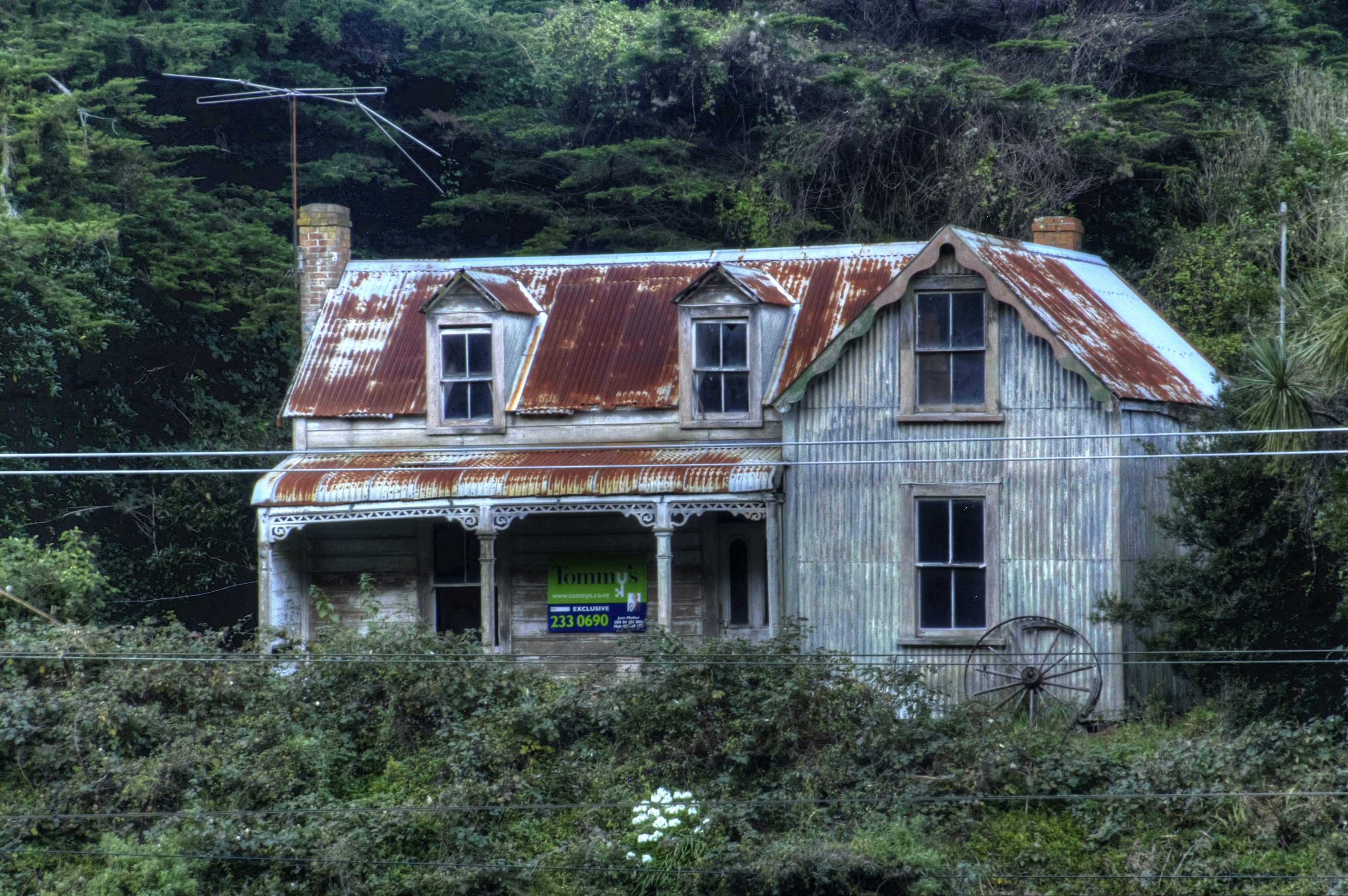
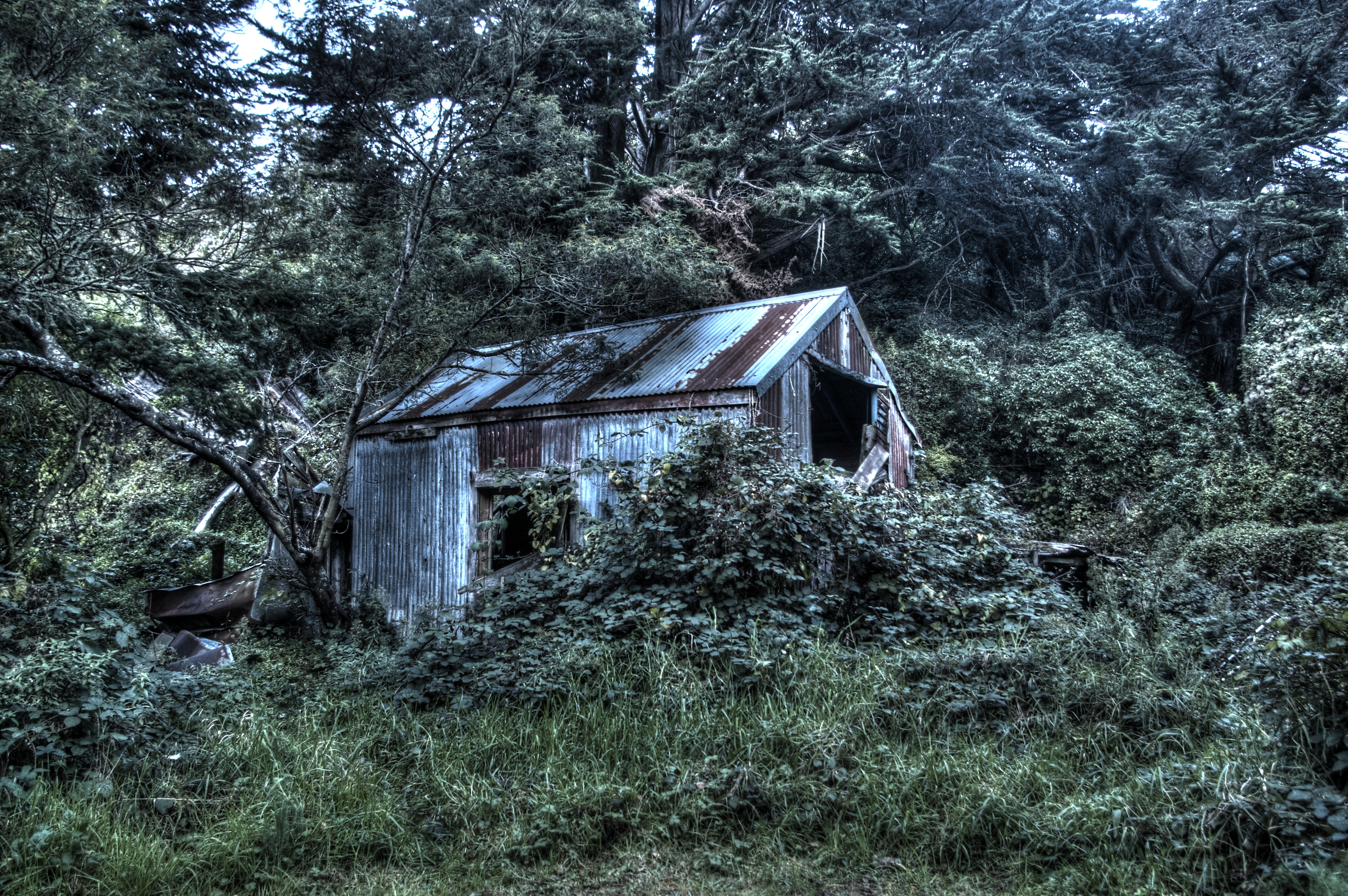
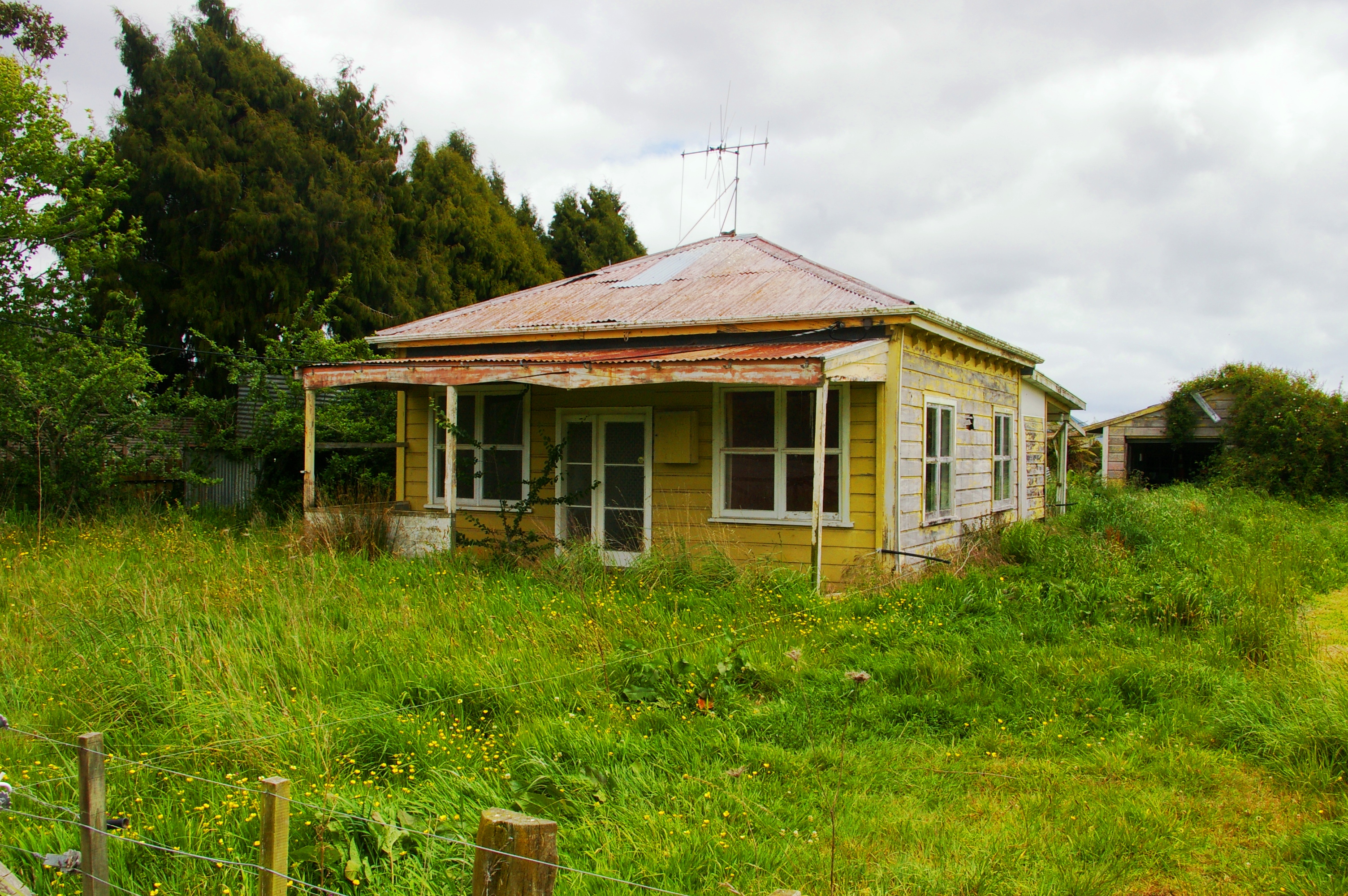
Driving rural back roads in the Waitomo region, we came across several well-worn former abodes. Interestingly to us, many a collapsing farmhouse had a companion tree somewhat alleviating its loneliness, presumably planted by its former occupants.

Heat, Water and Silence

The current temporary closure of this commercialised geothermal area in the North Island of New Zealand allowed us to capture nature steadily continuing its activity in the peaceful absence of human occupation. According to Māori legend, New Zealand’s geothermal areas were created by two ember-bearing travellers – not on the sea, but through the earth. The two sisters of ocean navigator Ngātoro-i-rangi heard his call for their help from the midst of a blizzard at Mount Tongariro. They loaded six kete baskets with glowing embers and summoned Te Pupu and Te Hoata – the subterranean goddesses of fire – to deliver them to their imperilled brother. The goddesses dived deep into the earth and carried the baskets of heat from Hawaiiki (the Polynesian homeland) to Aotearoa. Each time the goddesses surfaced on their voyage they left a trail of embers, creating geothermal sites at Whakaari (White Island), Moutohorā (Whale Island), Rotoiti, Tarawera, Rotorua, Ōrākei Korako, Wairakei and Tokaanu. By the time they reached Ngātoro-i-rangi at Ketetahi, Tongariro, only one kete of fire remained to save his life.

Keith Butler

This incline was opened in 1889 in the South Island of New Zealand to transport coal by rail down from the mines it served. It operated for nearly a century until the closure of the mines. A caretaker, William Butler, stayed on when the settlement emptied out. On the 13th of September, 1988, a rainstorm caused a landslide, burying what remained of the settlement and killing Butler. His body and car were never found.
Preoccupation

“This Place is Occupied; Please Keep Out,” reads the sign above Rimu Cottage in Waiuta. The Waiuta township in upper Grey Valley on New Zealand’s southern West Coast thrived for only 45 years before the gold mine that sustained and necessitated it closed down in 1951.

Inclinations

Since the late 1960’s these coal tubs on the Millerton Incline in the northwest of the South Island of New Zealand have sat unmoving on their tracks. The Millerton Incline was built in 1891 and the mine it serviced began production five years later. The tubs would transport coal to Granity, which boasted at the time the largest wooden coal loading bins in the country. For the past half century coal production has shifted to the nearby Stockton coalfield.

An Eye In The Earth

While exploring the small gold mining settlement of Waiuta, near Reefton in New Zealand, we found this little u-shaped tunnel network with two entrances nestled into the side of a bush-clad hill.

Know Your Biorhythms

This hut in Waiuta, near Reefton in New Zealand, is where gold miner and photographer Joseph Divis lived from 1930. Divis appeared as a subject in many of his photographs, setting a shutter time release and darting around into the frame. After a career-ending injury in the Blackwater mine in 1939, Divis was interned as an ‘enemy alien’ during World War Two, and his health further declined. When he returned to Waiuta at the end of 1943 he was dependent on crutches. When the Blackwater mine closed in 1951, Divis was one of few residents who chose to stay in what rapidly became a ghost town.

The Power of Being Thankful

Multiple layers of history are present at this site, including a New Zealand residence for a USA-based Christian study abroad organisation, a B&B and a religious convent. These layers were violently disordered by an earthquake and now are piled in a heap in a now-condemned structure soon to be demolished. Perhaps the evacuated students learnt in that one singular event more about “God and Nature” than was promised in their curriculum.

Above The Glass

A couple of old chimneys tower over an abandoned glass factory near the village of Krushevo, in the municipality of Sevlievo, in Gabrovo Province, northern central Bulgaria. Gunner thanks his generous and kind hosts, Nicola Miller and Jonathan Taylor.


Anatomy Class

The teacher in this Bulgarian classroom clearly wanted her/his students to fully know their surroundings and themselves. Anti-fascist partisan artwork was still on display well beyond the fall of communism from 1987, and about a decade later took on a state of suspended animation with the closure of this village school.

North Korea in New Zealand

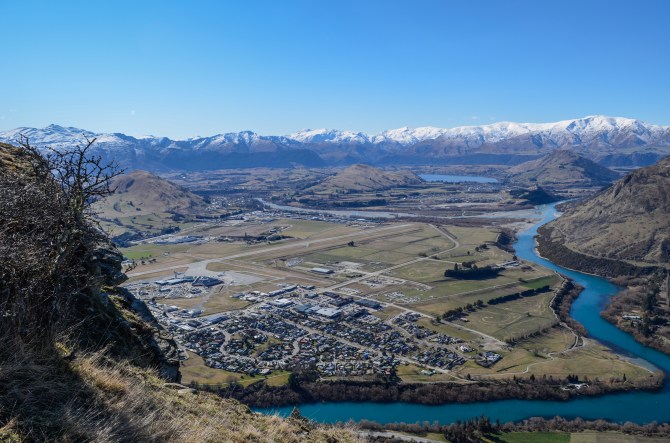
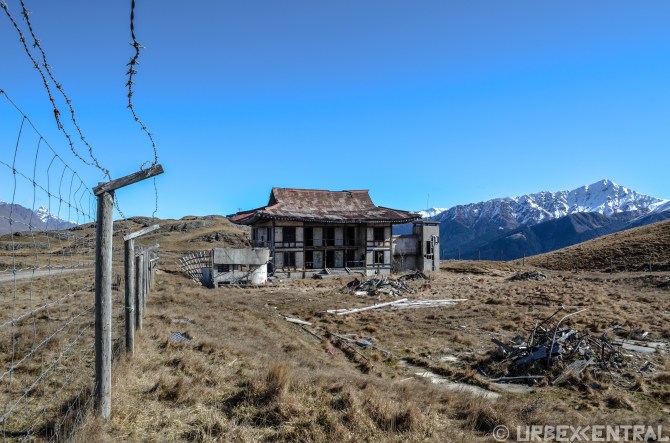
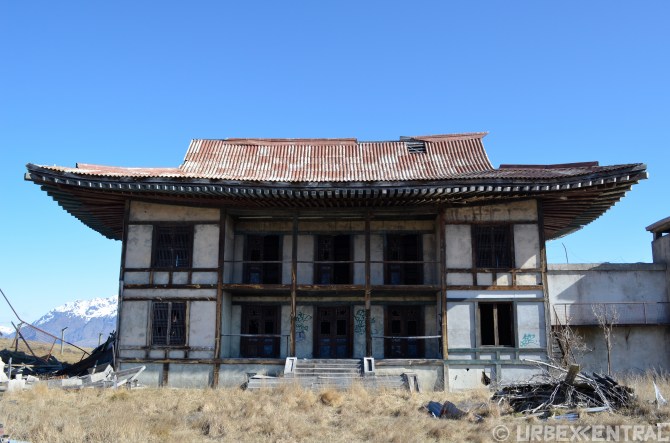
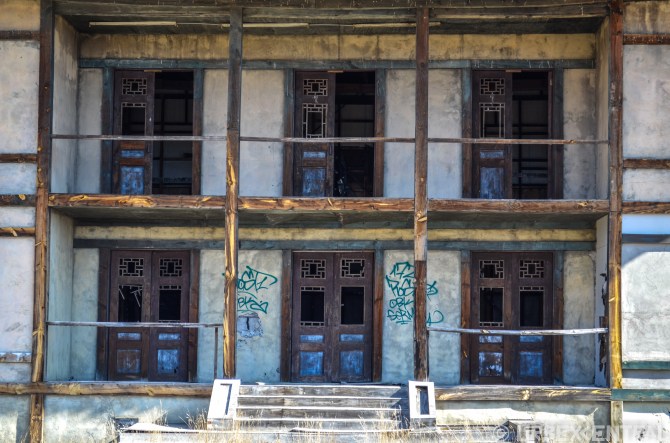
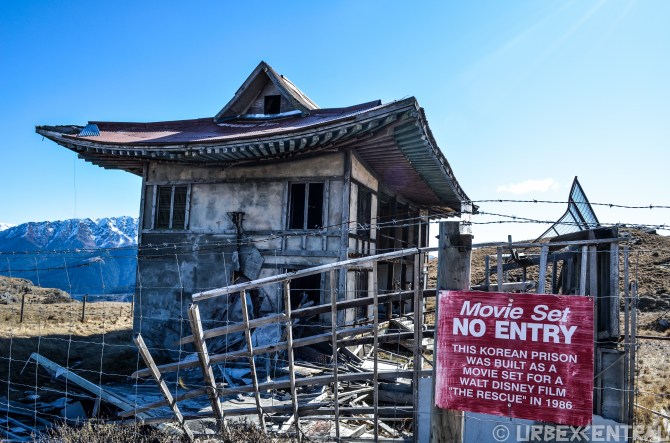
The information I had surrounding this location sounded almost mythological, an abandoned North Korean prison movie set in Queenstown?

Since access to the mountain had been closed for the last five years, I had to go in the hard way, straight up the sheer face of the mountain! A few cuts and bruises later navigating dense bush, deer and goat I finally reached the top.

What greeted me felt so out of place, an old North Korean prison surrounding by beautiful Queenstown scenery, Awesome!

North Korea Prison SetNorth Korea Prison Set

North Korea Prison Set
North Korea Prison SetNorth Korea Prison SetNorth Korea Prison SetNorth Korea Prison Set

North Korea Prison Set

North Korea Prison Set

North Korea Prison SetNorth Korea Prison Set

The Old Marine Zoo

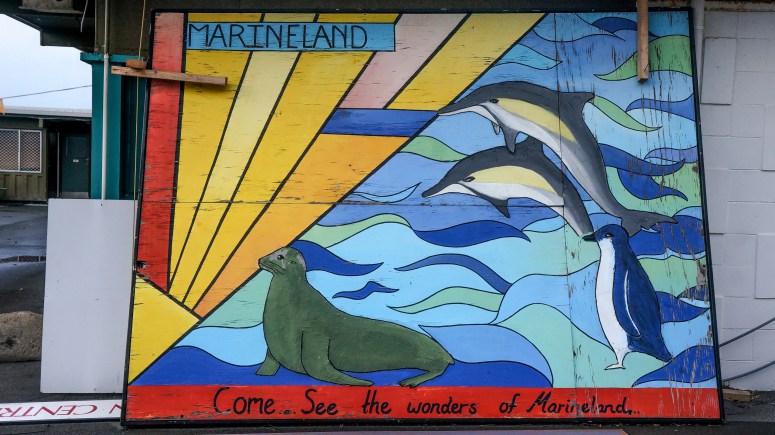
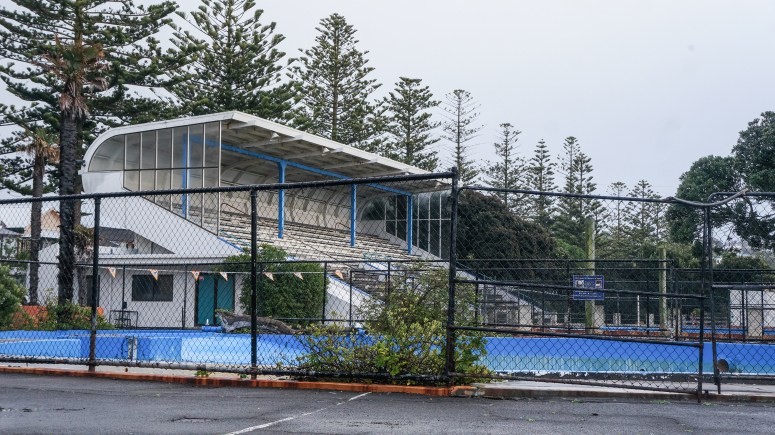
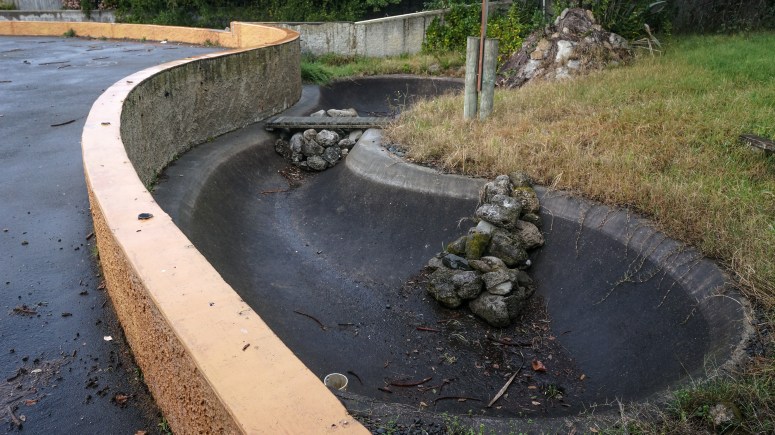
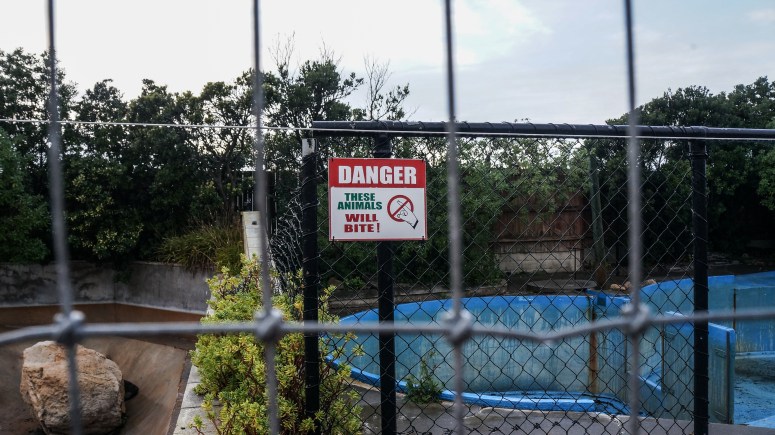
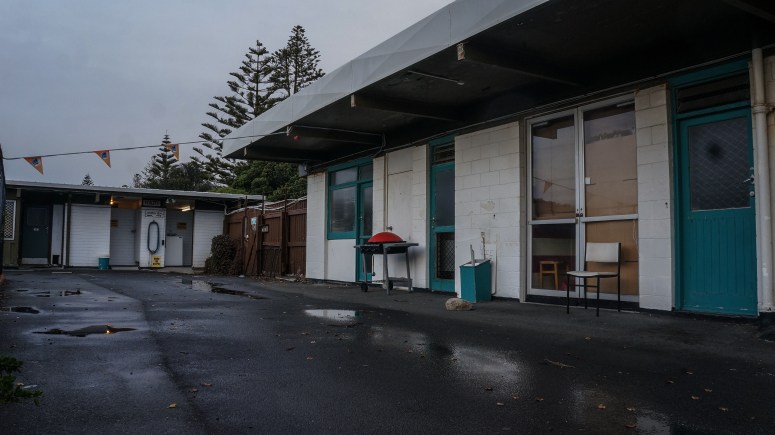
Marine land was a marine mammal park that opened in 1965 and closed in 2009 with some of the animals being relocated and some staying on until they could be rehomed.

It was once home to a number of species including Californian sea lions, leopard seals, penguins, bottlenose dolphins and otters.

Throughout it’s years the park played hosts to big crowds until its decline where the longtime manager of the park resigned in 2009 after allegations of falsifying the documents that allowed them to keep fur seal pups.

This explore was very heavy on the senses, a strong odour of fish and a panicked visit to the park due to an alarm and incoming security arriving. The zoo was once extremely secure for good reason, with 24/7 cctv to protect the animals as numerous break-ins had happened in the past including some vandals who fed a dolphin nails!

Enjoy the pictures.

Korokoro dam

Built in 1903, the Korokoro dam was the first gravity fed concrete dam in New Zealand. It was originally constructed to supply water to Petone, some kilometers away.
The dam is now defunct and full of silt.

NZR – Boneyard

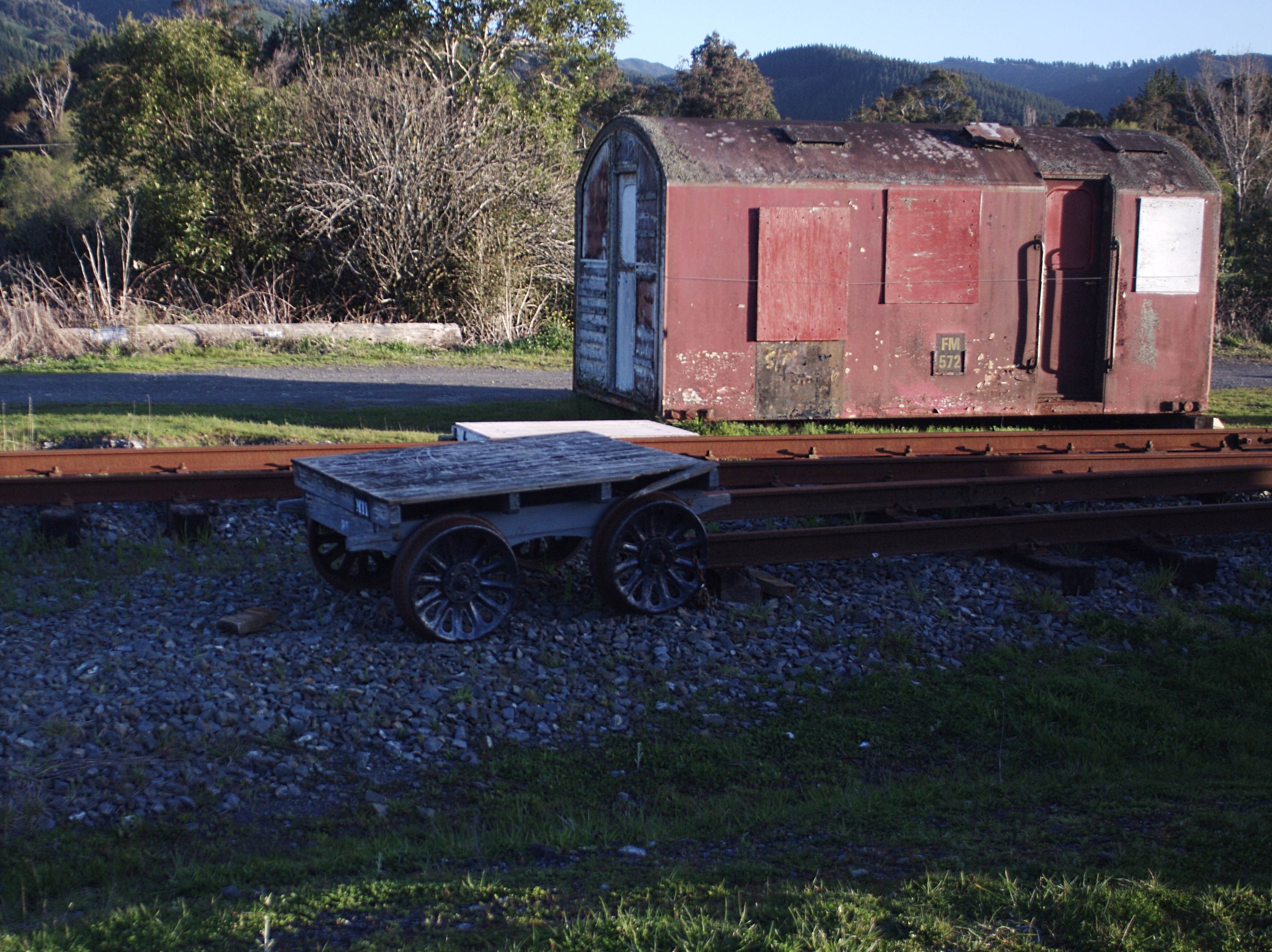
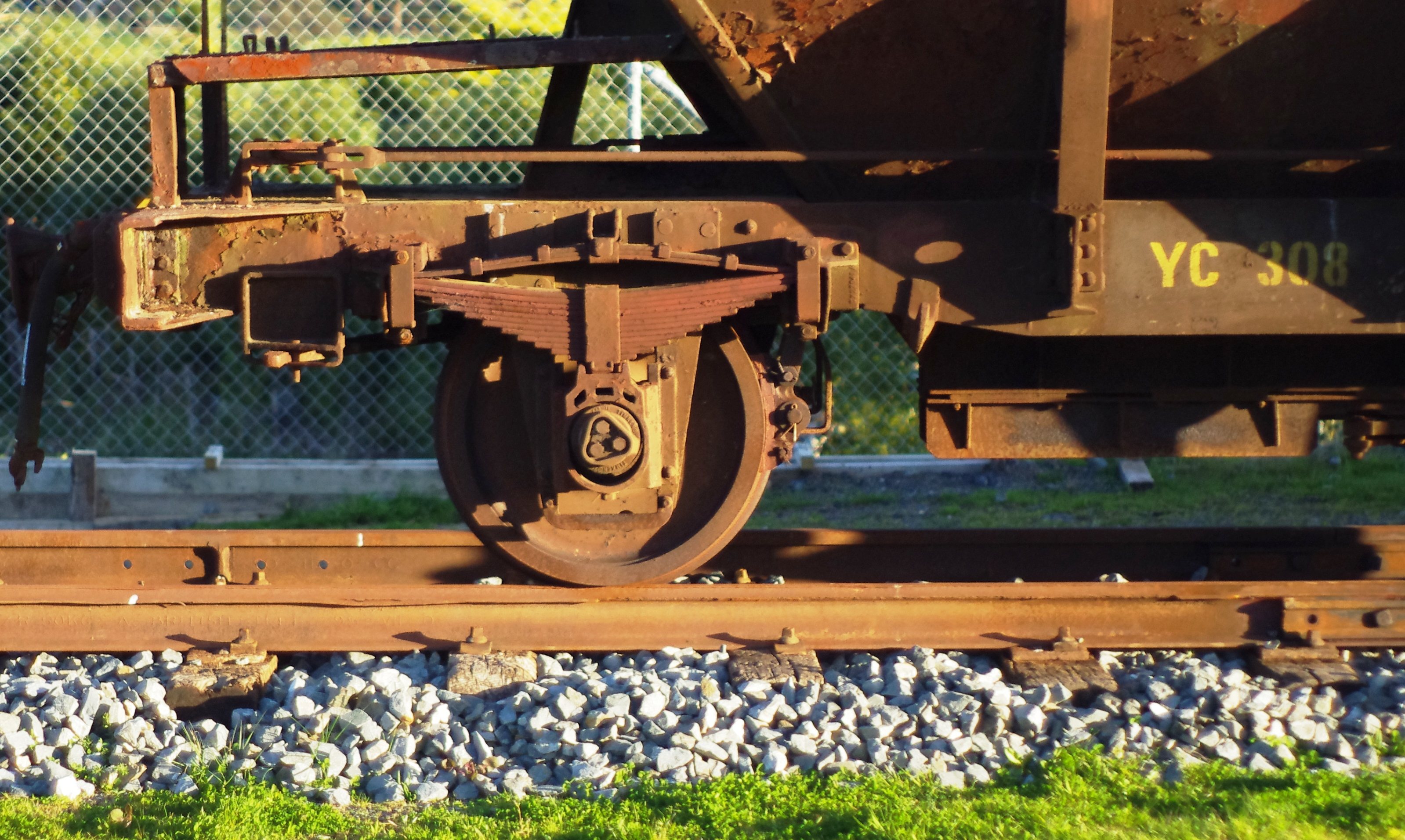
As I was rattling by on the train I noticed this small train boneyard in the middle of the countryside – and we decided that it deserved an inspection!
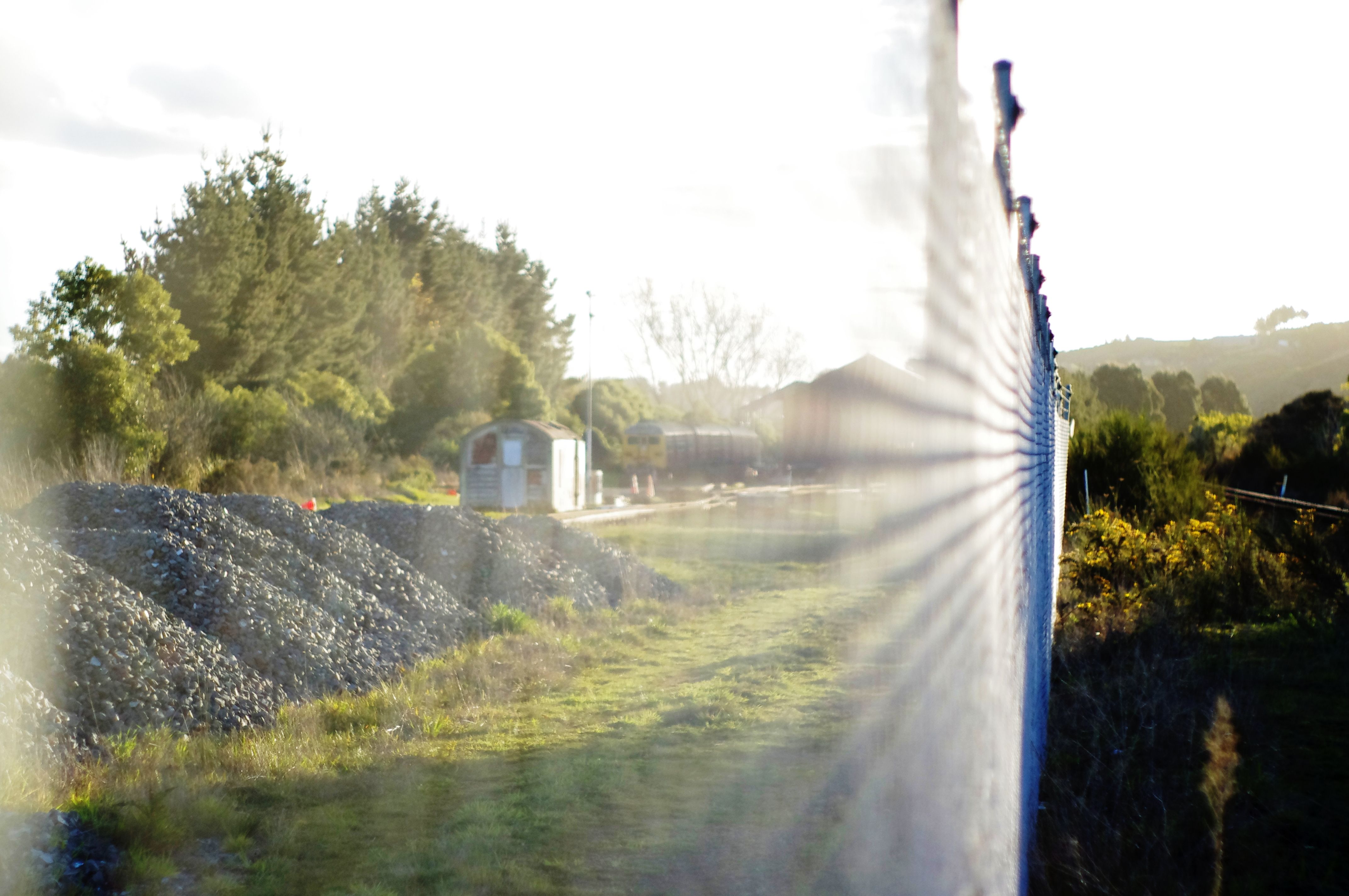
Surrounded by a high electrified perimeter fence and with dogs baying nearby, we couldn’t hang around but managed to snap these shots.IMGP2922 IMGP2924 IMGP2929 IMGP6099 IMGP6101_2 IMGP6114

Pioneer Cottage

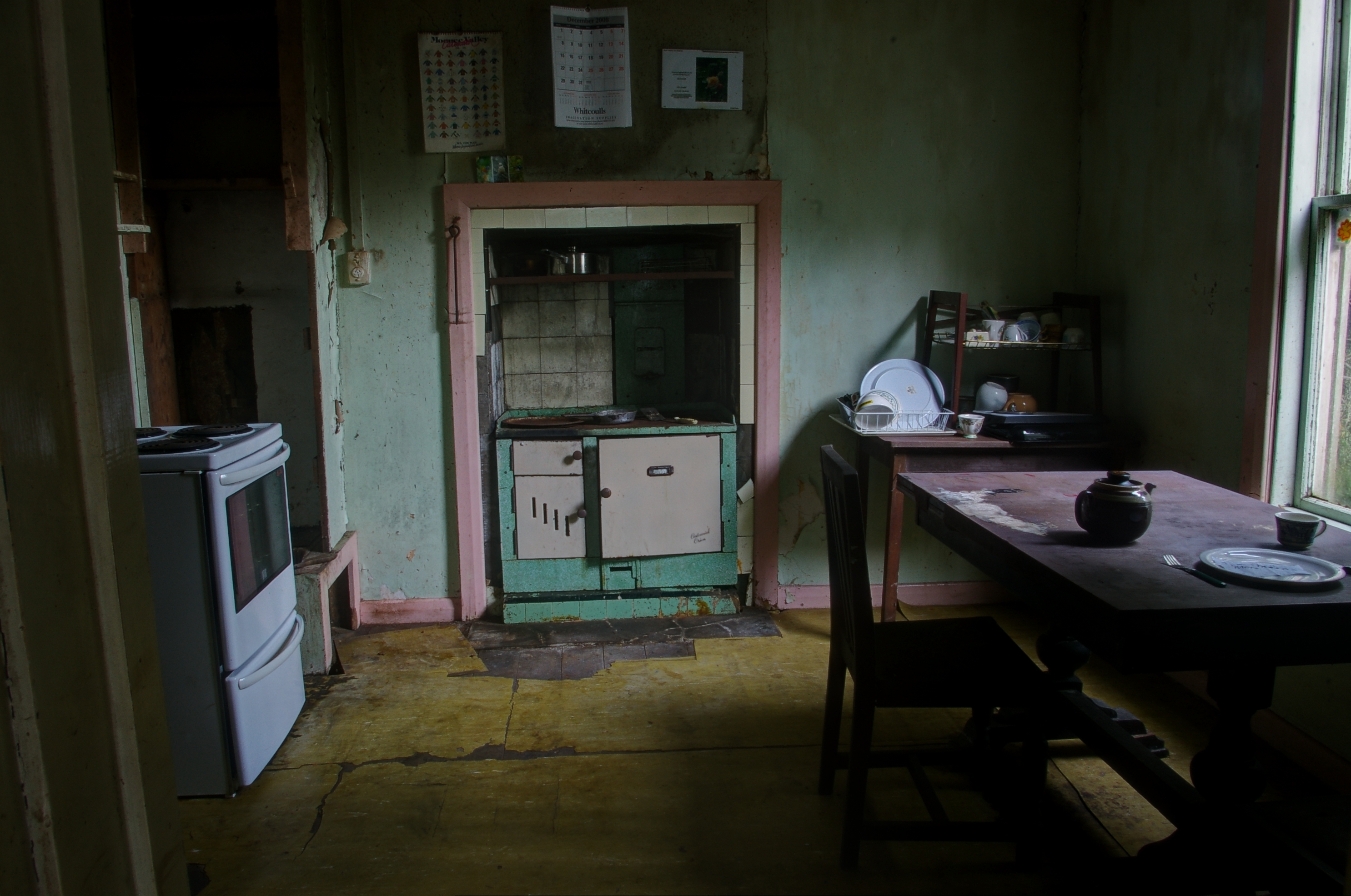
This abandoned house is trapped in time, there are numerous reminders of the history of this building scattered throughout. It is as if the occupants simply walked out 50 years ago, with dishes still drying in the kitchen…

IMGP2580 IMGP2599_608_fused kitchen long shed staircaseIMGP1690_1_2_3_4_fused IMGP1669_71_74_fused IMGP1637 Dinner For No One 2