Exploring the abandoned former French colonial era church on Bokor Mountain in Cambodia recently. In 1978 the Vietnamese invaded Cambodia, toppling the murderous Khmer Rouge in a matter of weeks. There was however a stalemate for a time on Bokor (and other locations) as the Vietnamese and the Khmer Rouge battled it out- fighting between the church and nearby casino. In recent years the church has had occasional use- it’s first in nearly four decades. “Nobody knows the trouble I’ve seen…”
Category: Video
Nokor
Not your usual urbex video, but exploring ruins nonetheless. This is the strange fusion temple complex of Banteay Prey Nokor in Cambodia that we visited late last year. Situated in countryside near the town of Kompong Cham, the original 11th century Mahayana Buddhist shrine has been added onto over the centuries and incorporated into a bewildering and sprawling complex of wat’s and stupa’s. Apart from a security guard and a couple of monks we had the place to ourselves. More to come from Cambodia soon…
Marooned
Exploring a century old shipwreck near Wellington recently…
Gross Chapel
Getting all religious at an historic abandoned chapel recently…
Chiller
A video from a couple of years ago- wandering around the creepy ruins of an abandoned cool-stores facility in Taranaki. Happy Halloween folks 😉
Inhospitable
Filmed in late 2011- this was the final days of the old Hawera Hospital (1925-2012). Demolition was already well underway on the South Taranaki Hospital, with at least half the complex already gone. A compact digital camera was rigged onto the hot-shoe of a DSLR to capture on video the state the place and what was being photographed- plenty of shaky camera footage ensued. Abandoned in 2002, the hospital’s state of decline over the next decade was dramatic and completely unnecessary. It wasn’t a pretty explore- a bleak and hazardous environment, the complete opposite of what a hospital is supposed to be about- inhospitable.
Quarantined
This former quarantine station was first opened in 1872 for people arriving New Zealand with contagious diseases. The facilities were refurbished and extended in 1918-19 and were maintained in readiness until World War II (1939-45) but were little used. The accommodation blocks were used in both World War I and World War II to house interned “enemy aliens”. For over 100 years, beginning in the early 1880s, it also served as an animal quarantine station. Animals arriving in New Zealand from other countries were quarantined on the island for 30–60 days to check they were free of disease. Blood samples were taken regularly and tested. Each animal was also treated for internal and external parasites.
In 1971 this particular facility, a maximum security animal quarantine station was completed. Until then, New Zealand had only ever imported livestock from Britain, Australia and Canada. The idea of a maximum security animal station was to enable scientists and geneticists to study new exotic breeds from outside of these ‘safe’ countries. When the station received its first shipment of animals in March 1972, it was the most sophisticated facility of its kind in the world. This allowed for the importation of a more diverse range of exotic animals such as elk, red deer, alpaca and llama, and capacity to hold more of the traditional imported livestock. In 1985 a scheme was introduced to import ova and embryos of cattle, sheep, and goats for implantation into New Zealand livestock. This inadvertently lessened the need for quarantine stations. It meant that existing livestock lines could be diversified rather than relying on importing. The quarantine station was closed in 1995.
Vacancy
This former conference and accommodation complex- closed due to being “earthquake prone”- is still very, very vacant…
Mother Earth
At the fringe of this neglected community garden area, there was a strange, landscaped new-age prayer circle thing. It wasn’t peaceful, inspirational, meditative etc… just a bit weird, kitsch, humorous, tacky and kinda creepy. The amphitheatre, inspired by something called the Vortrovia Vision, is apparently called an “Amphenium”. Wow, if it’s got a cool name like that it’s got to be pretty impressive, right? Wrong!
More quotes from the beautifully presented(sic) informational details onsite: “This local/universal, sacred/secular, aesthetic/functional built & landscaped environment, called the “Amphenium,“will serve some of the following purposes; a spiritual-cultural arts centre, a solar power generator & multi functional performance venue, a kinetic work of art and tourist attraction, a 24/7 online multi-media experience, a showcase for new environmentally friendly technology, a planetarium, a site for celebrating seasonal and astronomical events (eg. solstices/equinoxes), a sculpted park featuring medicinal flora & works of art reflecting spiritual, mythical, astrological & cosmological themes: the wellspring generator, portal to & birthplace of a sustainable new world. Access to the apex of the dome would be catered for by an egg shaped capsule. As it ascends it will revolve & open up like a flower into 8 horizontal segments.” Hmm- that’s one helluva multi-functional venue… the UFO landing dock was missing though 😉
Escuela Mala
A re-posted video of Petone College from early 2013. This former high school- abandoned, vandalized and the victim of numerous arson attacks- has finally been euthanized to make way for a retirement village. Escuela Mala loosely translates as “bad school” in Spanish.
The Sun Is In Our Eyes
Not exactly “urbex”- but definately exploring the urban- this visit to the North Lebanese city of Tripoli and surrounds in late 2005, had more scares and thrills than your usual explore. Shot mostly from the ancient Crusader citadel of Qala’at Sanjil (Raymond de Saint-Gilles), it was evident that pigeon training/racing is a popular pastime in Tripoli.
Lebanon’s second city is now a no-go zone, with fighting between Sunni Muslims and Alawites killing 27 people in the last two weeks alone. The long-running rivalry between Tripoli’s Sunni Muslims and members of the Alawite sect, an offshoot of Shi’ite Islam, has been worsened by Syria’s three-year-conflict. The civil war has become increasingly sectarian as mostly Sunni rebels – who represent the majority in Syria – battle President Bashar al-Assad’s predominantly Alawite government and Syrian Armed Forces.
Rivers of the Damned
We explored a drain that runs underneath the edge of a cemetery, this video documents our journey into hell and back.
Don’t Be Light
Exploring one of our favourite abandonments early in 2013; a companion/sequel to “Don’t Be In The Dark“. Regards to all our fans up north – Don’t Be Light…
Carpe Diem
This former high school closed in 2007, and despite more than $85,000 spent on security since, fed-up residents have arranged patrols after systematic vandalism and theft. A poster in one of the classrooms ironically proclaims “seize the day”- yeah right… The New Zealand Government is currently trying to offload 52 closed schools. Doing so is more complex than selling a private home, and steps required under the Public Works Act can cause big delays. Obstacles to sale include locating former owners and their successors if the land was gifted, or for the right of first refusal, and complex Maori land claims. But for local residents the delays further the pain of school closures, as past community hubs turn into eyesores.
2013 in review
The WordPress.com stats helper monkeys prepared a 2013 annual report for Urbex Central. Thanks for watching and stay tuned for 2014…

Here’s an excerpt:
The concert hall at the Sydney Opera House holds 2,700 people. This blog was viewed about 25,000 times in 2013. If it were a concert at Sydney Opera House, it would take about 9 sold-out performances for that many people to see it.
Artillery
This coastal artillery battery (one of many) was built to defend New Zealand’s capital Wellington against a Naval attack. Work began in 1908 on constructing a 2 gun battery using 6″MkVII guns. By 1912 these 6″ guns were manned by the Wellington Naval Artillery Volunteers. At its prime at the beginning of World War II, this fort had a total of no less than four different batteries of guns, and became the HQ for the heavy artillery regiment that manned the various coastal defence batteries in and around Wellington.
Future Fix
Exploring the grounds of a former historic hospital- unfortunately now earmarked for demolition due to the large amount of asbestos and at least a $50m repair bill.
Cooler
Exploring the labyrinthian maze of a former cool store complex…
ill Institute
This purpose built institute- and accommodation halls- is now largely vacant and abandoned… Constructed in the early 1970s in typical Brutalist style- the imposing, totalitarian and fortress like qualities are not exactly an architecture form for aspiring students…
Ford
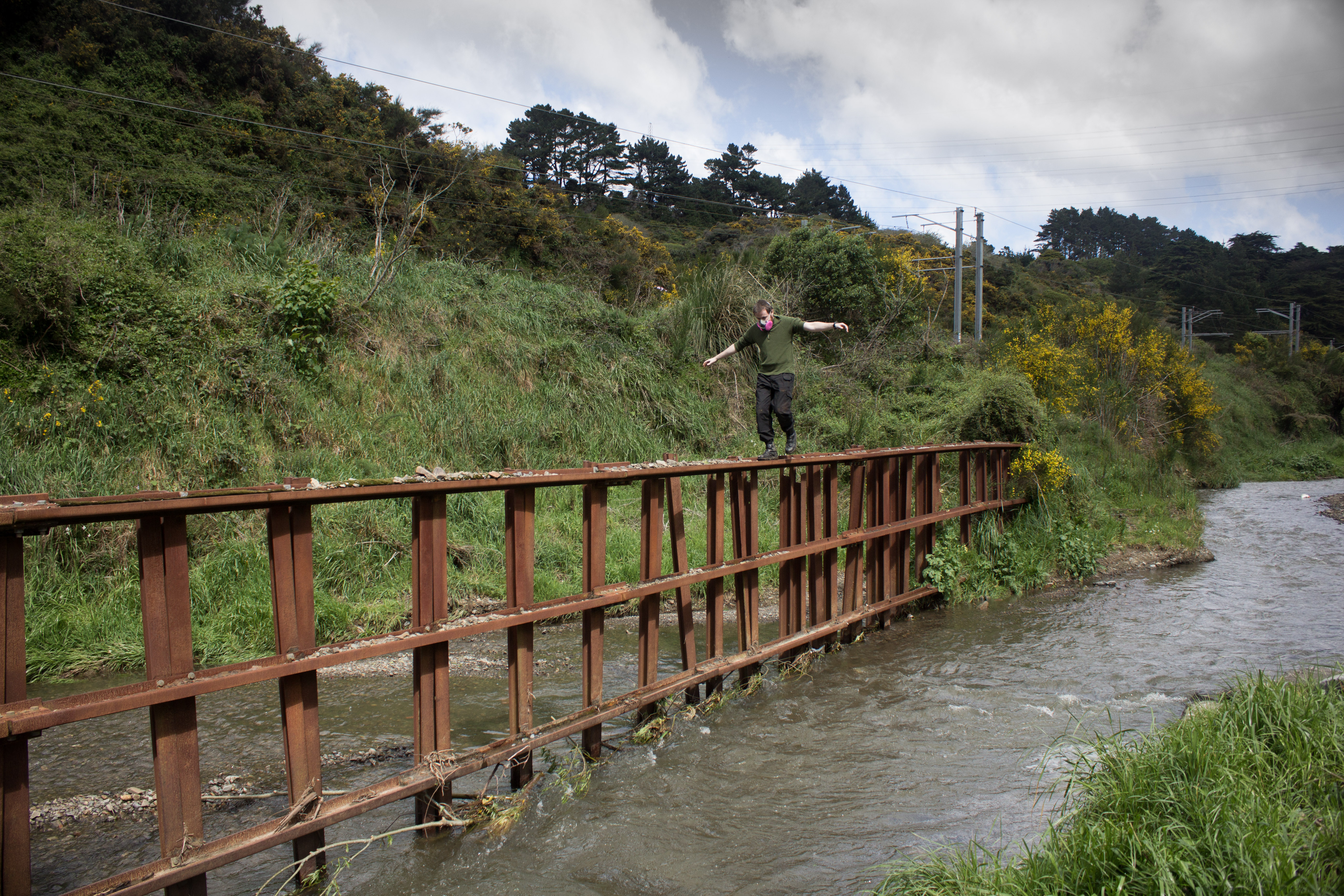
Fording a stream in a rather unconventional manner, because here at Urbex Central we feel you don’t always need to take Urban Exploration seriously 🙂


Water Wall
This defunct reservoir is no longer used to supply Wellington’s northern suburbs with water, despite that the weir remains full. The sunny day made for a good opportunity to experiment with some infra-red photography and high-speed video.


Silence Please
Little is known about this location other than it may have once been operated by a religious organization. The former occupants seemed to have left in a hurry, leaving furniture, clothing and other daily detritus behind. They appear to have been Indian, going by the strong smell of curry and the Hindi word for silence (ilent) scribbled on the walls. We didn’t hang around long to investigate as there was a weird vibe to the place…
gymguano
Okay- so what else do you call a video exploring an abandoned school gymnasium full of pigeon poop…? 🙂
Freestyle
Sometimes we don’t even have to search for a new location- we just stumble on them. This abandoned rural school and pool is a good example. We came across it accidentally while taking some time out from exploring a nearby complex. Someone’s got to brush up on their freestyle strokes though 🙂
Trig or Track
“Don’t play on the tracks- head for the high ground”. Why not do both? Part II of Escarpment…
Anba Hatre
Aswan, Egypt, Dec 2005: Anba Hatre is an earlier name for the 7th century Coptic Christian monastery of St Simeon- featured here in the previous post. During the exploration some video was shot on a very basic mini-DV tape camcorder, and due to this being the last tape. it was edited in camera to make the tape last longer. This is the result, with only a basic “damaged” effect and a soundtrack by the instrumental band Grails, appropriately titled “Erosion Blues”.
The Monastery
Aswan, Egypt, Dec 2005: After exploring some ancient tombs on the westbank of the Nile (featured here)- we decided to walk across the open desert to the ruined 7th century monastery of St. Simeon. It didn’t look far, but in the heat and harsh enviroment of the desert, it proved to be a bit more challenging. The Monastery of St Simeon dates back to the 7th century- it survived as a Christian stronghold of southern Egypt up until being sacked by Saladin in 1173 and abandoned. No real thorough archaeological attention has ever been paid to this ancient site. It was examined and published by Grossmann in 1985, and in 1998 by the inspectors of the antiquities- but still very little is known about this ancient monastery fortress.


The Dead Pool
“I’ve never let my school interfere with my education.” Mark Twain
Decrypt
Egypt, Dec 2005: Inspecting some ancient tombs on the westbank of the Nile- across from Aswan. They were completely off the tourist trail and not mentioned in any guidebooks. We eventually found a man who had keys to them and he let us in for a look- after a certain amount of “baksheesh” was paid. One tomb was for the overseer of Kom from approx 191bc- another dated way back, at least 4000 years…
Ammo
Exploring what we think were former ammuntion stores- though from the ouside they look more like hobbit holes…
Cockatoo Island – Introduction/Teaser
This is the first in a new series of posts focusing on Cockatoo Island, situated in Sydney harbour, with each of these instalments focusing on a different aspect of what cockatoo island has to offer in the way of urban exploration, the video here is a general overview of some of the different features of the island.
During it’s colourful history it has been used as a Military Barracks, Prison/Gaol, Shipyard and Naval Dockyard amongst other things. As a result the island is teeming with reminders of it’s history and is a plethora of abandoned buildings, tunnels, cranes and other structures including a beautiful old power station.
For more information about Cockatoo Island see:
http://www.cockatooisland.gov.au/about/history.html
http://en.wikipedia.org/wiki/Cockatoo_Island,_New_South_Wales
Escuela Mala
“I had a terrible education. I attended a school for emotionally disturbed teachers.”
Woody Allen
Pyro
Pyromania is an impulse control disorder in which individuals repeatedly fail to resist impulses to deliberately start fires, in order to relieve tension, for gratification or for relief. The term pyromania comes from the Greek word πῦρ (‘pyr’, fire).
This was just one of a dozen buildings torched by a pyromaniac over a single weekend two years ago. A Porirua man was eventually charged with 13 arsons that included setting fire to five churches, but was found not guilty by reason of insanity.
T.A.B
Horsing around at a deserted racecourse and inspecting a disused tote building…
Departures
“This is the final call for flight UC101. Departing at 1300 hours from Gate 9 for Space Station X…” With a bit of imagination, this abandoned airport boarding bridge could be a gateway to another reality…
Beelitz-Heilstätten
Beelitz-Heilstätten, just south of Berlin, was a large hospital complex that has its beginnings in 1898.

Originally designed as a sanatorium – with the outbreak of World War I in 1914, it was converted into a military hospital for the German Army.

The suitably freezing, misty day only emphasised the eeriness of the vast hospital complex, which consists of at least 60 buildings.

As we wandered around trying to find a way inside, it was strange to think that a gammy-legged Hitler may have once walked these very same steps almost a century ago.

During the months of October and November of 1916, a young Adolf Hitler recuperated here (unfortunately) after being wounded in the leg at the Battle of the Somme.

Eventually we gained access through a broken basement window, spending the next several hours exploring the derelict hospital…

At the close of World War II in 1945, Beelitz-Heilstätten was occupied by Soviet forces – remaining a Soviet military hospital up until 1995, well after German reunification. Since the late 1990’s however, the complex has been left mostly abandoned and become a favourite playground for urbex in Germany.

Our exploration was finally interrupted when a team of men in hi-visibility jackets arrived on the scene.

As night was descending, we felt it was about time to leave anyway – only wishing we’d taken some better photos before our hasty exit…

Rolling
Abandoned rolling-stock, or so we thought. They’d been sitting there idle for years, but within a couple of weeks of our visit- they had disappeared without a trace…


Drainspotting
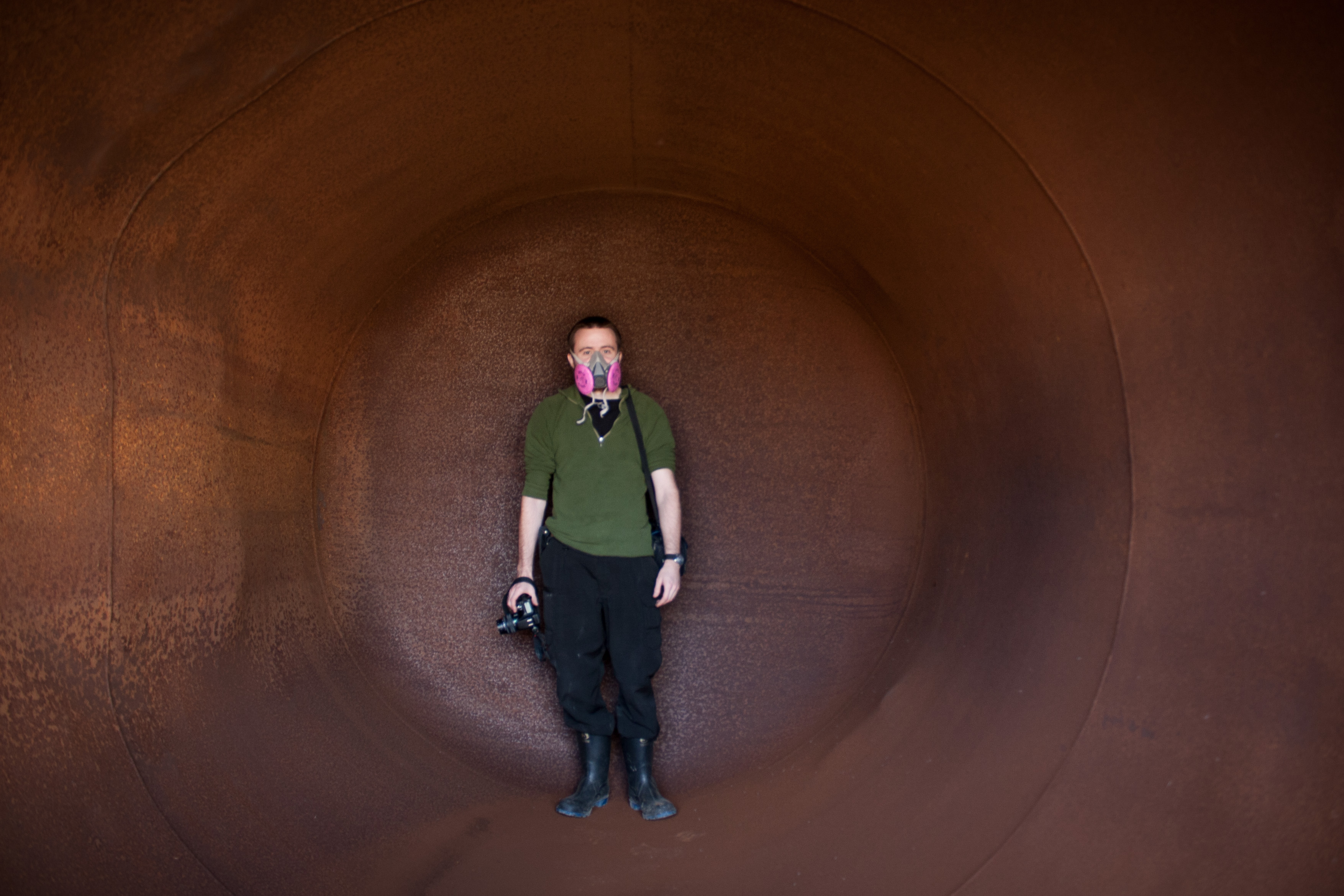
“Never play on the train tracks”- but no one said anything about playing under the tracks…
In Vivo
In vivo (Latin for “within the living”) is experimentation using a whole, living organism as opposed to a partial or dead organism. Animal testing and clinical trials are two forms of in vivo research. On average around 300,000 animals per year are used in experimentation, testing and teaching in New Zealand – from cats and dogs to rabbits, deer, mice, rats, fish, birds, pigs, cows and guinea pigs. This particular former testing facility has been irresponsibly left to the ravages of time and vandalism, a haunting reminder of what we commit in the name of science.
The Convent
This former Catholic girls boarding school and convent was closed in the mid 1980′s. The buildings have been used for a variety of purposes over the years (including featuring in a couple of Peter Jackson films), but it has now been deemed unsafe and closed indefinately. Although carrying the Historic Places Trust’s highest heritage protection status, the closure due to being “Earthquake prone” has left it in a strange kind of limbo. The future looks very bleak indeed for this Historic landmark.
Bad Science
Some more Chemistry experiments from a former tertiary institution… This is both a sequel and companion to Gunner’s Big Science.
The Tower
The iconic Hawera water tower has watched over this South Taranaki town for a century now. Standing at 55 meters high, the tower was saved from demolition after years of neglect in the 80s/90s had made it unsafe. Hawera (or “Te Hawera”) literally means ‘the burnt place’, and originates after an incident between two feuding Maori tribes in the area. One tribe attacked the other during the night and burned their village down- so it became known as ‘the burnt place’.
Don’t Be In The Dark
A night visit to our favourite local factory… Documenting its history & decline- was interrupted by Gunner’s insistence on throwing a bit of light on the subject…
Exploration in London and Paris
Exploration in London and Paris
A substantial article by a journalist embedded in an urbex crew in London.
Urbex Party
This party was host to about 100 urban explorers in Melbourne earlier this year, the acoustics of fireworks going off in a drain is quite a lot different to what you can hear topside.
Chiller
Exploring the ruins of a former coolstore in Patea, 3 hours north of Wellington…
 U R B E X C E N T R A L